Takeaway Packaging for Restaurants, Cafés and Caterers
Hot mains, noodles, sushi, soup, salads and the bag that carries them all. This range covers what a restaurant or caterer sends out of the door, printed in your colours and made to your portions.
- 10 products, from £0.25 per unit
- Free design proof
- Free tracked UK delivery
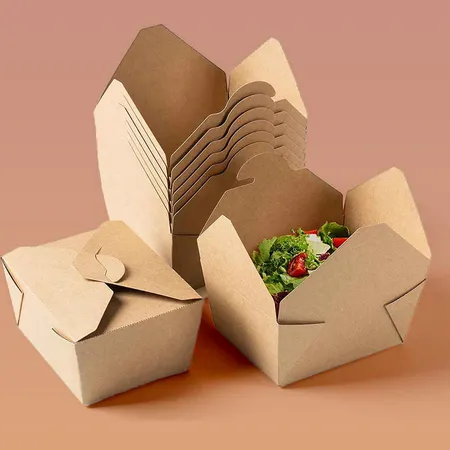
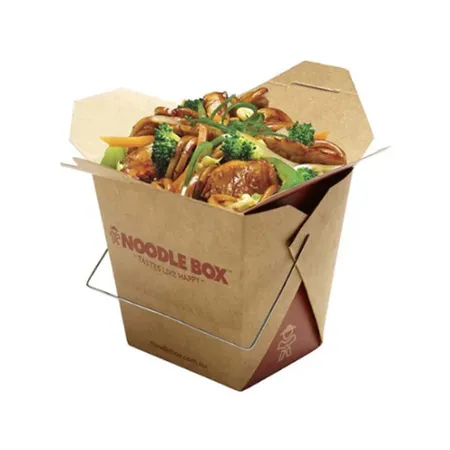
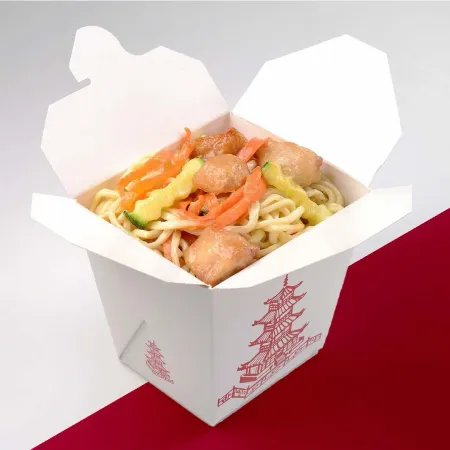
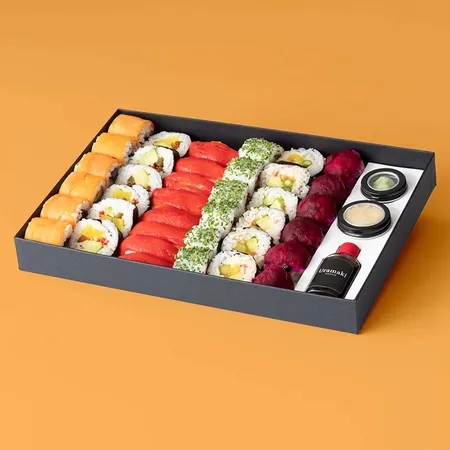 Takeaway BoxesEveryday hot mains, rice dishes and pasta to goNoodle BoxesWok noodles and stir-fries eaten straight from the boxChinese Takeaway BoxesMulti-dish Chinese takeaway orders and set mealsSushi BoxesSushi sets, platters and chilled grab-and-go rolls
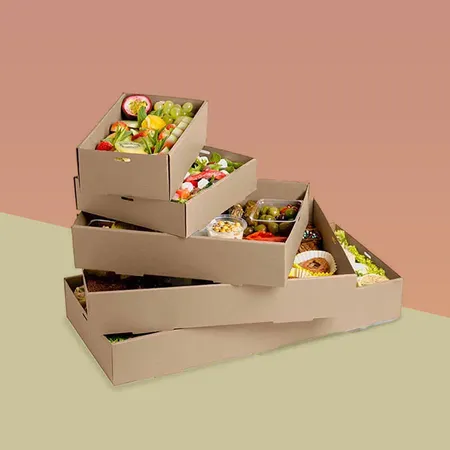 Salad BoxesSalads, grain bowls and cold pasta from the fridge
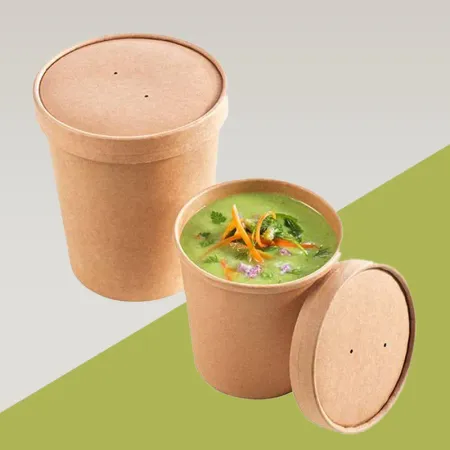 Soup ContainersHot soup, stew and chilli portions to take away
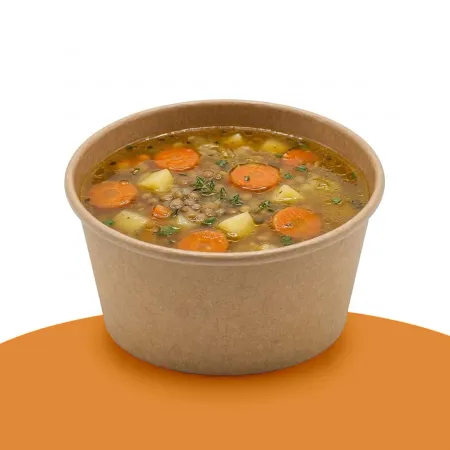 Paper Food BowlsPoke, rice, grain and salad bowls eaten with a fork
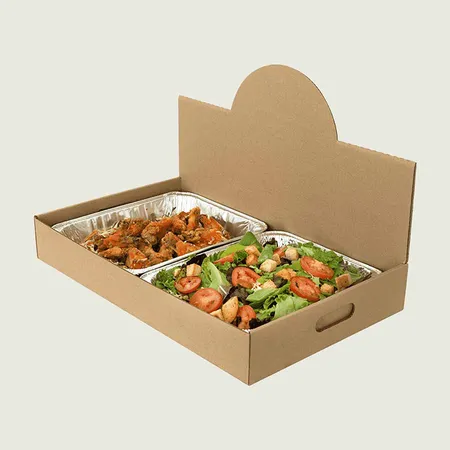 Catering BoxesBuffets, office lunches and platters for a group
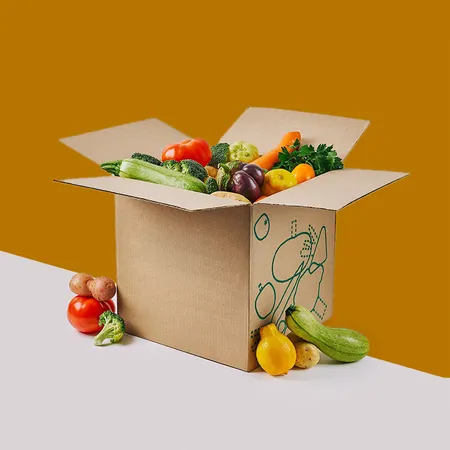 Food BoxesVeg boxes, meal kits and packaged food products
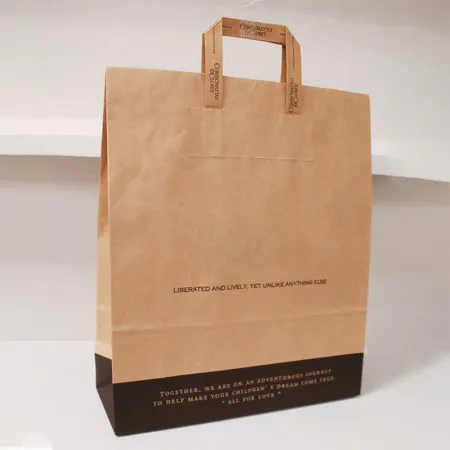 Takeaway Paper BagsCarrying a full takeaway or delivery order
What does our takeaway packaging range cover?
This is the broadest range on the site. It covers ten items, from a single portion of soup to a catering box that feeds an office.
Some items are about the food: a noodle box with a wire-free fold, a bowl for poke, a pot with a lid for soup. Others are about the order as a whole, like the paper bag that carries three boxes to a car.
The table lists every item in the range with the job it does best.
| Packaging | Best for | Key detail |
|---|---|---|
| Takeaway Boxes | Hot mains, rice and pasta | Lidded box, often 500 to 1,500 ml |
| Noodle Boxes | Wok noodles eaten from the box | Folded pail with tuck-in top flaps |
| Chinese Takeaway Boxes | Multi-dish set meals | Pails in 8, 16 and 26 oz sizes |
| Sushi Boxes | Sushi sets and platters | Shallow box, often 40 to 50 mm deep |
| Salad Boxes | Salads and cold grain dishes | Window lid on suitable styles |
| Soup Containers | Soup, stew and chilli | Round pot with a fitted lid |
| Paper Food Bowls | Poke, rice and grain bowls | Open bowl from 500 to 1,300 ml |
| Catering Boxes | Buffets and office lunches | Large box built around platters or trays |
| Food Boxes | Meal kits, veg boxes and products | Made around the contents |
| Takeaway Paper Bags | Carrying a whole order | Flat-bottom bag with handles |
Which restaurants and caterers use this range?
Any kitchen with a collection counter or a delivery app ends up ordering from this range. Restaurants use the meal boxes and bags. Noodle bars and sushi counters use the shaped boxes built for their dishes.
Cafés and lunch spots lean on soup pots, salad boxes and bowls. Caterers and event companies use catering boxes for platters and food boxes for meal kits.
Most kitchens start with a general-purpose lidded takeaway box for hot mains and add specialist items as the menu grows.
- Restaurants offering collection and delivery
- Noodle bars, wok kitchens and sushi counters
- Cafés selling soup, salads and lunch bowls
- Delivery-only kitchens with more than one brand
- Caterers supplying offices, meetings and events
- Food brands sending out meal kits and veg boxes
How do you pick a container for each dish?
Match the container to how the dish behaves, not just how big it is. A dry rice dish, a saucy curry and a cold salad all weigh about the same, but each one needs something different from its box.
Saucy dishes need a lid that sits tight and a lining that copes with oil. Noodles need room to be stirred with chopsticks. Salads need a window so they sell from a fridge, which is why salad boxes with a window lid sit in this range.
Work through the menu in this order and you will end up with a short list of four to six items.
- Group your dishes into hot and saucy, hot and dry, cold, and liquid.
- Note the portion size of each group in millilitres or ounces.
- Pick one container per group, then check it fits the largest dish.
- Add a bag size that holds your most common order.
- Send the list and we price the whole set on one quote.
What sizes do takeaway containers come in?
Most takeaway containers are sized by volume. In the UK you will see both millilitres and ounces, often on the same menu, so the table gives both where it helps.
A main course portion of curry and rice often fills 750 ml. A side portion sits nearer 500 ml. A sharing dish or a family rice can need 1,000 ml or more.
All sizes are made to order, so these are a starting point. Fill your current container with water and measure it if you are not sure.
| Item | Common sizes | Typical portion |
|---|---|---|
| Takeaway box | 500, 750, 1,000, 1,500 ml | Side, main, large main, sharing |
| Noodle box | 16, 26, 32 oz | Small, regular and large noodles |
| Soup container | 8, 12, 16 oz | Cup, regular and large soup |
| Paper food bowl | 500, 750, 1,000 ml | Side, lunch bowl, large bowl |
| Salad box | 500, 800, 1,000 ml | Side salad to full meal salad |
Which board handles sauce, steam and chilled food?
Hot saucy dishes are the hardest test. White or kraft folding board with a grease-resistant lining or coating on request keeps oil from soaking through to the outside.
Steam is the second problem. A tight lid traps it, which keeps food hot but softens anything crispy. Fried items do better in a box with a vent or a looser lid.
Liquids need their own container. Soup containers with fitted lids are built for soup, stew and chilli, which would leak from a folded box.
Cold food is easier. Folding board stays firm in a fridge, and a window cut-out on suitable styles shows the food without opening the lid.
Are noodle boxes better than flat takeaway boxes?
For noodles, usually yes. The tall pail shape keeps noodles deep enough to stir and lift, and the folded top flaps close without a separate lid.
Flat boxes suit rice dishes and curries better, where the food spreads out and is eaten with a fork. Folded noodle boxes for wok dishes are easier to eat from on the move.
Set-meal kitchens often use pails in several sizes for different dishes in one order. That is why the Chinese takeaway box range is sold in 8, 16 and 26 oz sizes that pack together in one bag.
What packaging suits sushi and cold lunches?
Sushi needs a shallow box with a flat floor so rolls sit in neat rows. Depth is often 40 to 50 mm, and the length follows the number of pieces.
Salads, grain bowls and cold pasta need a box or bowl that looks good in a fridge. A window lid or an open bowl with a separate lid lets people see what they are buying.
Bowls have become a menu category of their own. Paper food bowls for poke and grains are eaten from directly, so they need to be steady on a desk or a lap.
- Sushi: shallow box, rows of pieces, room for a soy sachet
- Salads: window lid on suitable styles, chilled shelf ready
- Bowls: wide base, often 750 to 1,000 ml for a lunch portion
- Cold pasta: lidded box with a grease-resistant lining for dressings
How do catering boxes and food boxes differ?
Catering boxes are built around trays or platters and are meant to be opened at a table. They are usually large, often 400 x 300 mm or bigger, and are designed to be carried by one person.
Food boxes are more general. They hold meal kits, veg deliveries, packaged products and gift boxes, and are made around whatever goes inside.
If you supply offices or meetings, catering boxes for platters and buffets are the right starting point. E flute corrugated, about 1.5 mm, keeps them flat under the weight of a full platter.
Why print the takeaway bag as well as the boxes?
The bag is the first thing a delivery customer sees and the last thing a passer-by sees. It travels down the street, sits on a doorstep and goes into an office kitchen.
Printing the bag lets you keep the boxes plain or one colour, which can lower the cost per order. Many kitchens do exactly that.
Size the bag to your most common order. Takeaway paper bags with handles are often made in small, medium and large to hold one, two or four boxes flat.
How should takeaway packaging be printed?
A consistent look across boxes, pots and bags makes a takeaway order feel like it came from one place. We set your logo and colours once, then fit them to each item.
One colour on kraft is the simplest and suits a lot of kitchens. Two colour gives more contrast. Full colour CMYK suits detailed artwork and photographs, especially on white board.
Lids show more than sides when boxes are stacked. Put the logo on the lid and keep sides simple. For pots and bowls, a wraparound pattern works better than a single logo.
What mistakes do kitchens make with takeaway packaging?
Most mistakes come from treating every dish the same. A single container for the whole menu rarely works.
Food brands sending meal kits make their own mistakes, usually around size. Food boxes made around your contents should be sized after you have packed a real kit, not before.
- Sending soup or gravy in a folded box instead of a lidded pot
- Sealing fried food under a tight lid on a long delivery
- Choosing a bag too small for the most common order
- Skipping a lining on curry and pasta boxes
- Ordering every size in equal numbers when one size sells most
How do you order takeaway packaging?
Send us the items you want, the sizes or portions, and a rough quantity for each. Tell us if you need a lining or window on any of them.
We reply with a written quote starting from £0.25 per unit, with quantities quoted per order and several items on one quote. Food-contact materials available on request, confirmed on that quote.
A free design proof comes next. Production takes 4 to 6 business days after you approve it, and free tracked delivery reaches any UK address in 2 to 3 business days. If anything arrives misprinted or damaged, photos sent within 10 days get it reprinted or refunded.
Takeaway Boxes, Noodle and Salad Packaging: common questions
Still unsure? Call +44 7578 382054, ask us on WhatsApp or write to info@thefoodpackaging.co.uk.
What is the most useful takeaway container to start with?
A lidded takeaway box around 750 ml covers most main courses. Add a smaller and larger size once you see which dishes sell.
Can soup go in a folded takeaway box?
No. Soup and other liquids need a round soup container with a fitted lid, which is part of this range.
How do I convert ounces to millilitres for takeaway pots?
One fluid ounce is about 28 ml, so a 16 oz pot holds about 450 ml. We can work in either unit on your quote.
Which takeaway items can have a window cut-out?
Window cut-outs are possible on suitable styles, mostly for cold food such as salads and sandwiches.
Do noodle boxes need a separate lid?
No. The folded top flaps tuck together to close the box, so there is no separate lid to store.
Can I print only the bag and keep boxes plain?
Yes. Many kitchens print the bag in full colour and keep boxes plain or one colour to keep costs down.
What size bag holds a typical delivery order?
A medium bag that takes two boxes flat suits most single orders. Families and offices may need a large bag for four.
Are catering boxes strong enough for heavy platters?
Catering boxes are often E flute corrugated so they stay flat under a full platter. Tell us the weight and we size the board.
Can paper food bowls take hot food?
Yes, paper bowls are used for hot rice and grain dishes as well as cold salads. Ask for a lining if the dish has a lot of dressing or oil.
Is there a takeaway box for sushi with sauce?
Sushi boxes are shallow with a flat floor, and there is room for a sachet of sauce beside the rolls.
Can food boxes be made for a meal kit subscription?
Yes. Food boxes are made around your contents, so send a packed kit's dimensions and we design the box to fit.
Where can I read about street food packaging specifically?
Our street food packaging checklist covers what market stalls and vans should order first.
No question matches that search.
Design Your Packaging
Pick a real photo of the packaging you want, put your logo on it, choose the print and send it to us. Our designers turn it into a free, print-ready proof.
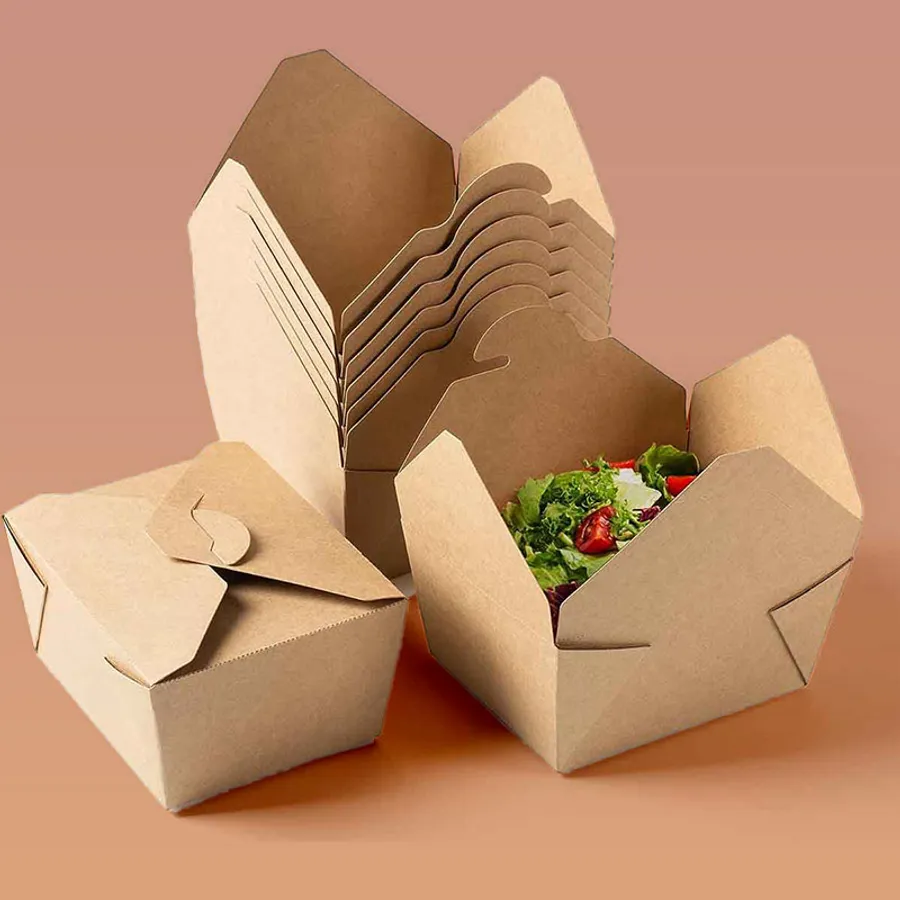
Upload your logo to see it on this photo
On the photo: Takeaway Boxes
Choose your packaging
Send us your full packaging brief
The more we know about the food, the service and the quantity, the sharper the price. A packaging specialist replies within one business day with a written quote and a free design proof.
- Price
- From £0.25 per unit, confirmed on a written quote
- Proof
- Free, before anything is printed
- Production
- 4–6 business days after proof approval
- Delivery
- Free and tracked across the UK, 2–3 business days
- Food contact
- Food-contact materials available on request