Packaging guide
Street Food Packaging: What to Order First
A practical checklist for market stalls, vans and pop-ups ordering their first printed packaging.
Why does packaging matter so much for street food?
At a market or festival, your packaging is your plate, your table and your shop sign. People eat standing up, walk away with your food and often post a photo before the first bite.
Space is also tight. A van or gazebo has room for a hot plate, a fryer, some ingredients and not much else. Every box you carry has to earn its place.
This checklist is for traders ordering printed packaging for the first time. It covers what to buy first, how many to order and how to keep it all usable on a busy day.
What should a new street food trader order first?
Start with the one item that carries your main dish. For most traders that is a tray, a box or a wrap. Get that right before adding anything else.
Then add a second item for your best-selling side, usually chips or fries. Napkins and a carry option for groups come third.
Resist ordering the full range on day one. Your menu will change in the first few weeks, and packaging bought for a dish you drop is wasted.
Write your list in order of how often each item is used per sale. The item used in every order goes first, and the item used in one order in ten goes last.
- One container for your main dish.
- One container for your main side.
- Printed paper or a wrap if your main dish is hand-held.
- A carry option for orders of two or more.
- Extras like dip pots or cone holders, once you know you need them.
Which packaging suits which street food?
Match the packaging to how people eat the dish. Fork food needs a tray or bowl with a firm base. Hand-held food needs a wrap, bag or cone.
The table lists common street food dishes with the packaging traders tend to choose and a typical portion weight.
| Dish | Typical portion | Packaging to start with |
|---|---|---|
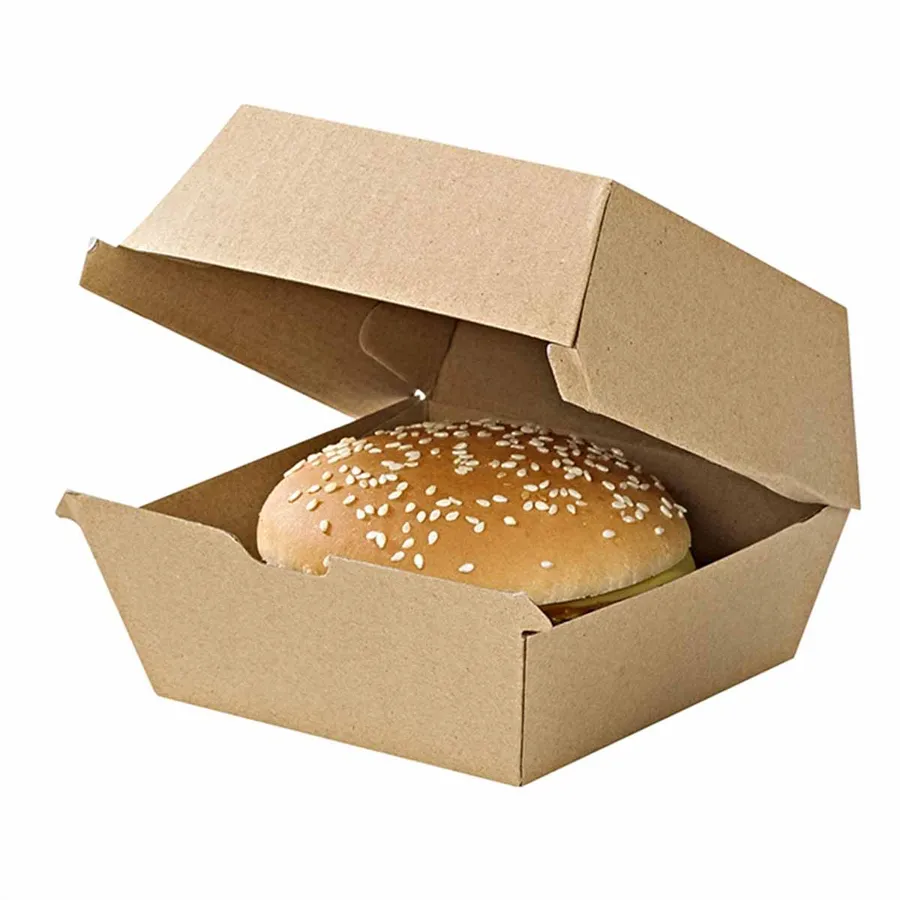
| Burger | One bun, 120 to 170 g patty | Burger box or burger bag plus a wrap |
| Loaded fries | 250 to 350 g with toppings | Deep tray or loaded fries box |
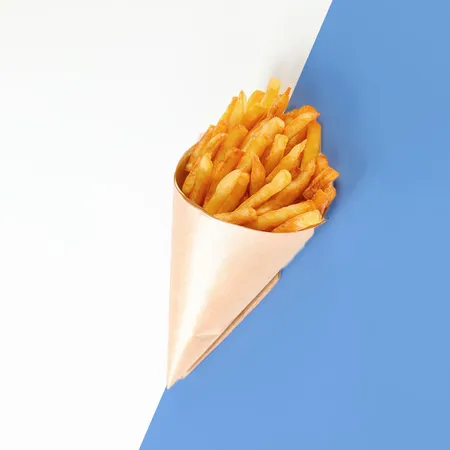
| Chips | 150 to 200 g | Chip cone, cup or scoop |
| Wraps and kebabs | 300 to 400 g filled | Wrap paper, kebab box for walking |
| Curry and rice | 350 to 450 g | Paper food bowl or lidded box |
| Hot dogs | One roll and sausage | Hot dog box or tray |
| Churros or waffles | 150 to 200 g | Churro box or waffle tray |
Should you choose trays, boxes or wraps?
Open trays are the fastest to serve. Food goes straight from the hot plate into the tray and over the counter. They suit anything eaten on the spot with a fork or fingers. See open food trays for street food for common sizes.
Lidded boxes take a moment longer but travel better. They suit people walking to a seating area or taking food home.
Wraps and bags are best for hand-held food. A burger or wrap in printed greaseproof paper is easy to eat while walking and costs little per portion.
Most stalls settle on one of each at most. A tray for fork food and a wrap for hand-held food covers the majority of street food menus.
How many units should you order for an event?
Start from the number of portions you expect to sell, then add a margin. Some boxes get dropped, folded wrong or used for a second portion.
A simple way to estimate is to count covers per hour at your busiest, then multiply by trading hours. A stall serving 60 portions an hour for six hours needs around 360 containers for the main dish.
Add 10 to 15 percent for spoilage. For a first event, it is better to have spare than to run out at the evening rush. Quantities are quoted per order, so you can price a few options.
- Expected portions per hour at peak
- Number of trading hours
- Number of trading days before your next order arrives
- 10 to 15 percent extra for spoilage and mistakes
What changes for pop-ups and one-off events?
A one-off event is harder to plan than a weekly market. You have no sales history, the crowd size is a guess, and leftover packaging may sit in a garage until next season.
Ask the organiser for expected footfall and the number of food traders. Divide one by the other for a rough idea of your share, then plan for the lower end with some headroom.
Choose packaging that works across several dishes. A mid-size tray can hold a main, a side or a dessert. One item then covers most of the menu if you have to change plans on the day.
Pop-ups inside bars or breweries have a different need. Customers often sit down, so open trays and baskets lined with printed paper work well, and lidded boxes are only needed for people taking food home.
Should your first order be printed or plain?
Printed packaging makes a stall look established and shows up in customers' photos. Plain packaging costs less per unit and works while you are testing a menu.
A popular middle path is one colour print on kraft. It is clear, simple and suits most street food brands.
Another option is to print one item and keep the rest plain. Many traders print the item that appears in photos, such as the burger wrap or the tray, and keep sides plain. Printed greaseproof paper for wraps is a low-cost way to start.
Whichever you choose, keep the design simple for the first run. You can add colours and extra items once you know what customers respond to.
How do you deal with grease, steam and weather outdoors?
Street food is often fried, saucy or both. Ask for a grease-resistant lining or coating on request on trays and boxes for fried food and loaded dishes.
Steam softens chips fast under a lid. Open trays and cones avoid that, which is one reason they are so common at markets.
Weather matters too. Rain softens board left in the open, and wind blows away napkins and loose paper. Keep spare packaging in sealed tubs inside the van and only bring out what you need for the next half hour.
How do you store packaging on a van or stall?
Flat-packed boxes take far less room than folded ones. Fold a batch during quiet moments and keep the rest flat.
Store packaging off the floor and away from the fryer and hot plate. Heat and steam make board curl, and a damp box will not fold cleanly.
Keep a written count of what is left at the end of each day. It takes a minute and tells you when to reorder before a busy weekend.
Group items by station. Trays and wraps sit by the person serving the main dish, while cups and cones sit by the chip fryer. Paper sheets go in a holder so they do not blow away. For the full range of hand-held options, see our burger and fast food boxes range.
How do you place your first order?
Send us your menu, your portion sizes and the date of your first event. Tell us which items you want printed and which plain.
Prices start from £0.25 per unit, confirmed on a written quote. Food-contact materials available on request. A free design proof comes before anything is printed, and our designers give free layout help.
Production takes 4 to 6 business days after you approve the proof. Delivery is free and tracked, taking 2 to 3 business days to any UK postcode. Work back from your event date and leave a few days spare. For sizes, see our UK takeaway packaging sizes guide.