Fish and Chip Packaging for UK Chip Shops
Boxes, paper, scoops, cups, cones and bags for the chippy counter and the seaside kiosk. Everything is made to your portion sizes and printed in your shop's colours.
- 7 products, from £0.25 per unit
- Free design proof
- Free tracked UK delivery
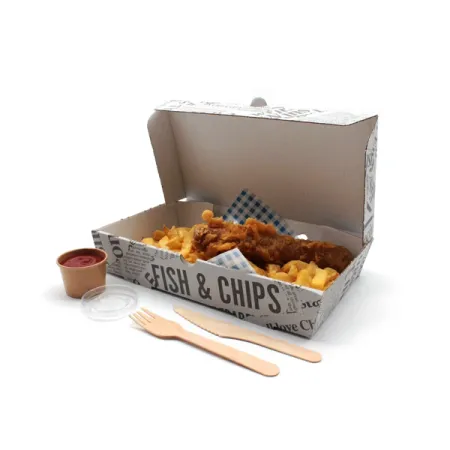
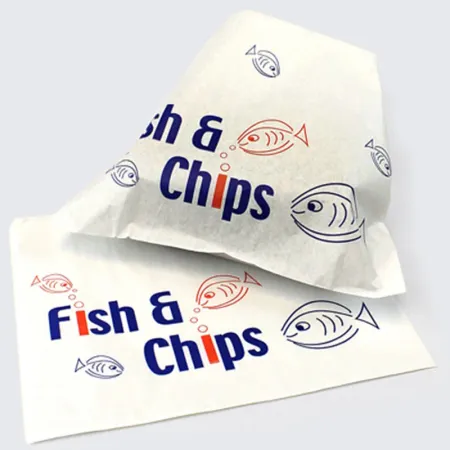
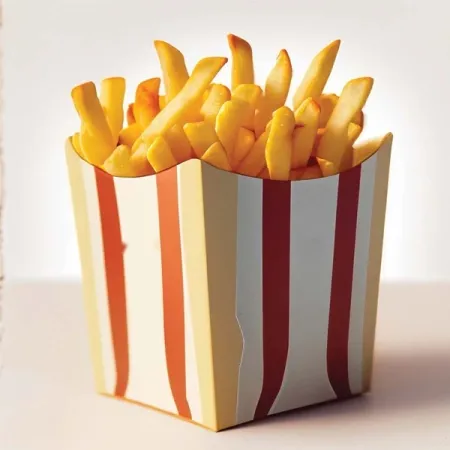
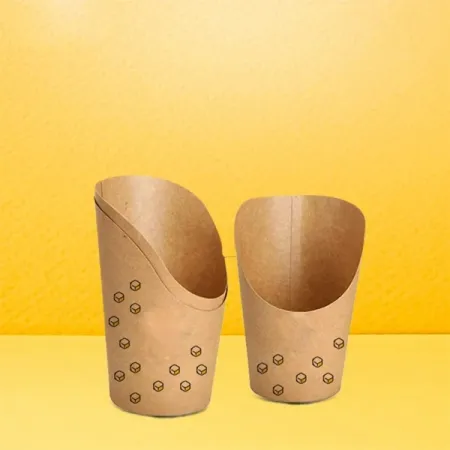 Fish and Chip BoxesFish suppers and chippy teas from chip shopsFish and Chip PaperWrapping fish suppers and lining chip shop basketsChip Scoop BoxesPortions of chips and fries served to eat straight awayChip CupsWalk-about chip portions at vans, fairs and kiosks
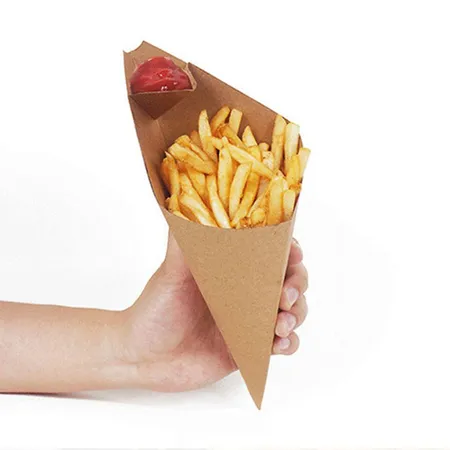 Chip and Fries ConesFries with a dip at festivals, stalls and burger bars
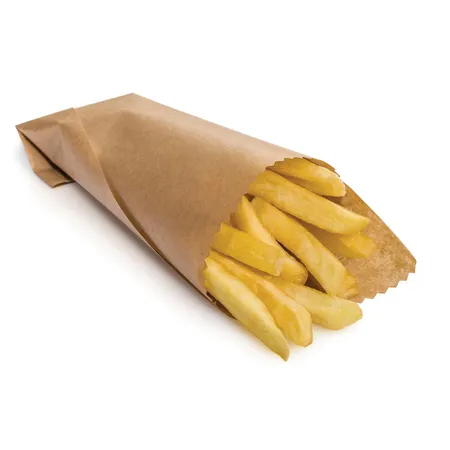 Chip BagsFast chip portions at chippies and burger counters
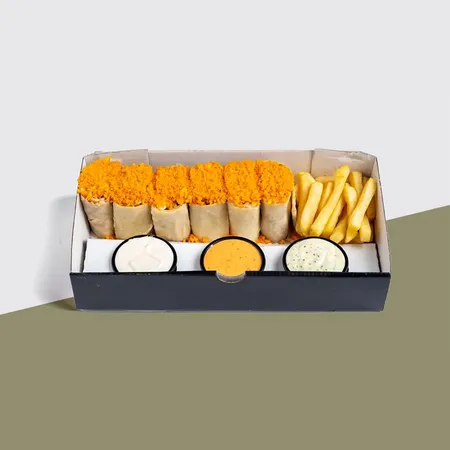 Loaded Fries BoxesDirty fries, cheesy chips and fries-and-dip combos
What does fish and chip packaging cover?
A chip shop sends out food in more ways than most takeaways. A fish supper goes in a box or in paper, a bag of chips goes in a pouch, and a kid's portion goes in a cup.
This range brings those formats together. Seven styles cover wrapped suppers, open portions for walking, and loaded fries with toppings.
The table compares all seven so you can see where each one earns its place on the counter.
| Packaging | Best for | Key detail |
|---|---|---|
| Fish and Chip Boxes | Fish suppers to take home | Long lidded box with room for a full fillet |
| Fish and Chip Paper | Traditional wrapped suppers | Greaseproof sheets, plain or printed |
| Chip Scoop Boxes | Chips served to eat straight away | Open scoop shape, filled from the fryer |
| Chip Cups | Walk-about portions at vans and fairs | Cup that fits one hand |
| Chip and Fries Cones | Fries with a dip at festivals | Tall cone, some with a dip pocket |
| Chip Bags | Fast portions at the counter | Flat paper pouch, open at the top |
| Loaded Fries Boxes | Cheesy chips and dirty fries | Deeper tray that holds sauce and toppings |
Which shops order chip shop packaging?
Traditional fish and chip shops are the main buyers. Seaside kiosks, pier stalls and mobile chippy vans follow close behind.
Burger bars and kebab shops order the chip formats too, since almost every takeaway sells a portion of chips. Pubs serving fish on a Friday often buy wrapping paper to line baskets.
For the classic takeaway supper, lidded fish and chip boxes are the backbone of most orders.
- Chip shops with a queue at teatime
- Seaside kiosks and pier stalls
- Mobile fish and chip vans at village events
- Pubs with a Friday fish menu
- Burger and kebab shops selling sides
Box or paper for a fish supper?
Paper is the traditional choice. It wraps around the fish and chips, holds heat for a short walk home and costs little per portion.
A box is sturdier. It stacks in a delivery bag, protects the batter from being squashed and keeps mushy peas pots upright beside the chips.
Many shops use both. Paper goes on the counter for walk-in trade, and boxes go out with delivery drivers. Printed fish and chip paper keeps the shop name on every wrapped supper.
Paper also suits shops that serve dine-in. A printed sheet in a basket gives the same look as the takeaway wrap. Customers then see one brand whether they sit down or walk out.
How do you choose between scoops, cups, cones and bags?
These four all hold chips without fish. The difference is how the customer eats and how fast your staff can fill them.
Scoops are filled straight from the fryer with a scoop of chips. Cups sit upright in one hand. Cones look good at events and can hold a dip. Bags are the fastest of all to fill and fold.
The table below sets out the trade-offs. Most shops pick two of the four.
| Format | Fill speed | Eating on the move | Holds a dip |
|---|---|---|---|
| Chip scoop | Fast | Good | Beside the chips |
| Chip cup | Fast | Very good | On top only |
| Chip cone | Medium | Very good | In a side pocket on some styles |
| Chip bag | Fastest | Good | No |
What sizes work for chip portions?
Chip portions are usually talked about by volume, in ounces, because that is how shops portion with a scoop. A small is often about 8 oz, a regular about 12 oz and a large about 16 oz by volume.
Fish suppers are measured by length. A regular fillet usually needs a box around 250 mm long, and a large fillet or a special can need 300 mm or more.
Everything is made to your size. Weigh or measure a few real portions on a busy night and send us those figures, not the menu name. A large at one shop can be a regular at the next, so names alone do not help us size a box.
Serving chips in a scoop at the counter? Chip scoop boxes in three portion sizes keep small, regular and large consistent from shift to shift.
How do you stop chips going soggy in the box?
Hot chips give off steam for several minutes. If that steam is trapped, the outside of each chip softens and the bottom layer turns limp.
Venting helps most. Small holes in a box lid let steam out while keeping heat in. Open formats like cups and cones avoid the problem by not having a lid at all.
Board choice matters too. White or kraft folding board suits chip portions. Larger supper boxes are often E flute corrugated, about 1.5 mm, which keeps its shape when it gets warm and slightly damp.
A grease-resistant lining or coating on request keeps vinegar and oil from soaking through to the printed outside. For fries eaten at a festival, chip and fries cones let steam rise out of the top.
Which packaging suits loaded fries?
Loaded fries are a different job from plain chips. Cheese sauce, gravy, pulled meat and jalapeños add weight and liquid, so the container needs a deeper floor and firmer walls.
Loaded fries boxes with deeper walls are built for that. They hold sauce without leaking at the corners and give room for a fork.
A grease-resistant lining is worth asking for on loaded fries. Without it, gravy can mark the outside of the box before the customer finishes eating.
How should chip shop packaging be printed?
Chip shop branding tends to be bold and simple: a shop name, a colour and sometimes a fish or a wave. That style suits one or two colour print.
Greaseproof paper takes ink differently from board, so colours look softer and slightly lighter. Your free design proof shows each item, so you can judge the match before anything is printed.
Chip cups suit a wraparound pattern. Bags suit a centred logo. Printed chip cups for vans and fairs carry your name all the way round, so it shows in photos.
- Keep the shop name large enough to read across a counter
- Use one or two colours on paper for the cleanest result
- Add your website or social handle to boxes and bags
- Leave fold areas on bags free of key text
Does seaside and seasonal trade need different packaging?
Seaside kiosks and summer event vans sell most of their chips to people walking along a front or a field. That changes what works best.
Lidded boxes matter less, because the food is eaten within minutes. Cups, cones and scoops matter more, and they need to sit comfortably in one hand while the other holds a fork or a drink.
Wind is a real factor on a promenade. Loose paper can lift and flap in a sea breeze. Many kiosks tuck a sheet into a scoop or cone rather than relying on a wrap alone.
Seasonal shops also order in peaks. Plan the spring order before the first sunny weekend. Allow time for the proof, then 4 to 6 business days of production and 2 to 3 days in transit.
How can you keep the queue moving at teatime?
Packaging that is slow to fold slows down the whole counter. Fold supper boxes before service and stack them beside the fryer, lids open.
Pre-cut paper in two sizes saves time over tearing from a roll. Keep cups or bags within reach of the person on the chip scoop.
For kids' and small portions, paper chip bags for quick portions are filled and handed over in seconds.
Label the shelf where each size lives. On a Friday night, a new member of staff should be able to grab a large box without asking.
What mistakes do chip shops make with packaging?
The same few problems come up when shops order packaging for the first time. Nearly all of them can be fixed before the order is placed.
Running out is a mistake too. Count how many suppers and chip portions you sell on your busiest week, then order with that week in mind rather than an average one.
- Closing hot chips in an unvented box for a long delivery
- Ordering one supper box size when the menu has a large fish
- Skipping a lining on boxes that carry curry sauce or gravy
- Printing fine detail on greaseproof paper, where ink spreads slightly
- Storing paper and boxes near the fryer, where they pick up moisture
How do you order fish and chip packaging?
Send us the items you need, your portion sizes and rough quantities. A photo of what you use now helps us match it.
We reply with a written quote from £0.25 per unit, with quantities quoted per order. You get a free design proof and free layout help from our designers.
Food-contact materials available on request, confirmed on the quote. Production takes 4 to 6 business days after proof approval, and free tracked UK delivery takes 2 to 3 business days.
- List each item: boxes, paper, scoops, cups, cones, bags or loaded fries boxes.
- Note your small, regular and large portion sizes.
- Choose plain, one colour, two colour or full colour print.
- Send your logo or shop name and approve the free proof.
- Receive your order flat, tracked, anywhere in the UK.
Fish and Chip Packaging: common questions
Still unsure? Call +44 7578 382054, ask us on WhatsApp or write to info@thefoodpackaging.co.uk.
Which fish and chip packaging should a new chip shop order first?
Most new shops start with supper boxes, wrapping paper and one chip-only format such as scoops or bags. Add cones or loaded fries boxes once you know what sells.
Can chip shop paper and boxes share one design?
Yes. We set your logo and colours once and adapt them to each item, then show every piece on the free proof.
How much chips does a regular scoop box hold?
A regular is often about 12 oz by volume, but we make every size to your own portion.
Do supper boxes come with vent holes?
Vent holes can be added to the lid on request. They help chips stay crisper on longer journeys.
Is printed paper more expensive than plain?
Printed paper costs more than plain because of the ink and set-up. Your written quote shows both options so you can compare.
Which chip format is best for a mobile van?
Cups and cones are popular with vans because customers eat while walking. Bags are the fastest to fill when the queue is long.
Can loaded fries boxes take hot gravy?
Yes, with a grease-resistant lining or coating on request. Deeper walls also help hold the sauce in.
Will vinegar soak through chip shop paper?
Greaseproof paper slows vinegar and oil, but very wet portions can still mark it. A second sheet or a box helps on long walks home.
Can I order mixed chip shop items in one delivery?
Yes. Mix boxes, paper, cups and bags on one quote and they arrive together with free tracked UK delivery.
Do chip cones hold a pot of dip?
Some cone styles have a side pocket for a dip. Tell us your dip pot size and we design around it.
Can fish and chip packaging be made in kraft?
Yes. Kraft folding board and kraft paper are both available and suit a traditional look.
Where can I compare greaseproof paper with coated board?
Our guide to greaseproof paper and coated board explains how each copes with oil and steam.
No question matches that search.
Design Your Packaging
Pick a real photo of the packaging you want, put your logo on it, choose the print and send it to us. Our designers turn it into a free, print-ready proof.
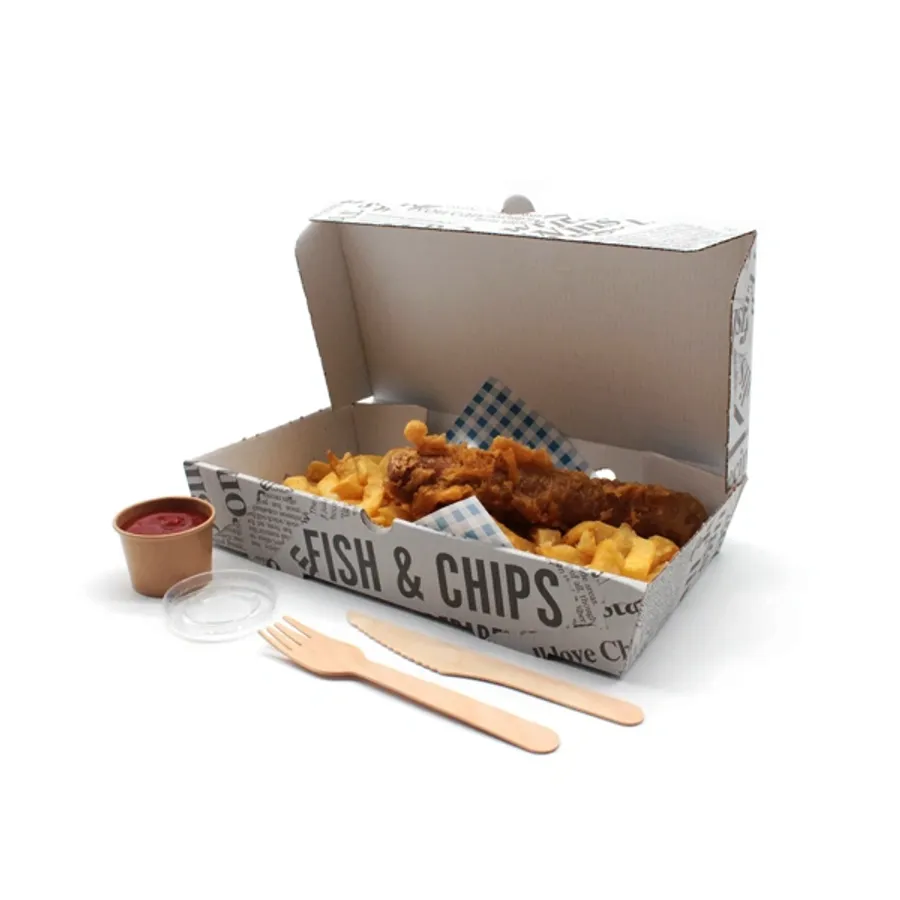
Upload your logo to see it on this photo
On the photo: Fish and Chip Boxes
Choose your packaging
Send us your full packaging brief
The more we know about the food, the service and the quantity, the sharper the price. A packaging specialist replies within one business day with a written quote and a free design proof.
- Price
- From £0.25 per unit, confirmed on a written quote
- Proof
- Free, before anything is printed
- Production
- 4–6 business days after proof approval
- Delivery
- Free and tracked across the UK, 2–3 business days
- Food contact
- Food-contact materials available on request