Food Trays and Greaseproof Paper for Counters and Kitchens
Open trays for street food and paper for wrapping, lining and separating. Pick plain sheets for the back of house or printed ones that carry your name to the table.
- 9 products, from £0.25 per unit
- Free design proof
- Free tracked UK delivery
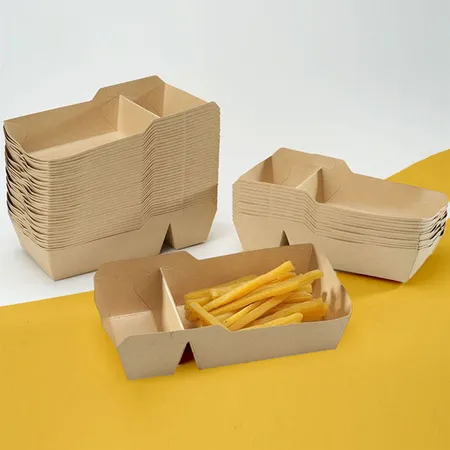
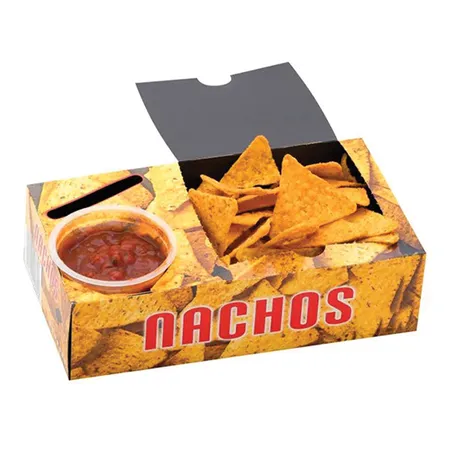
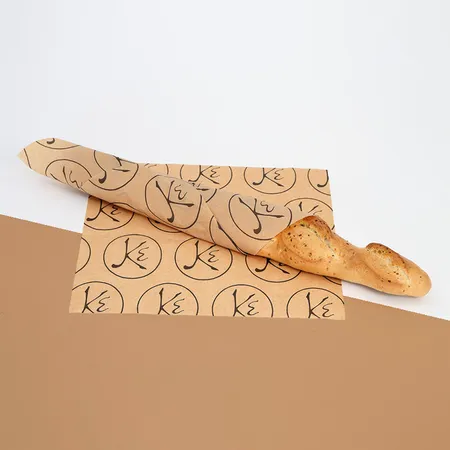
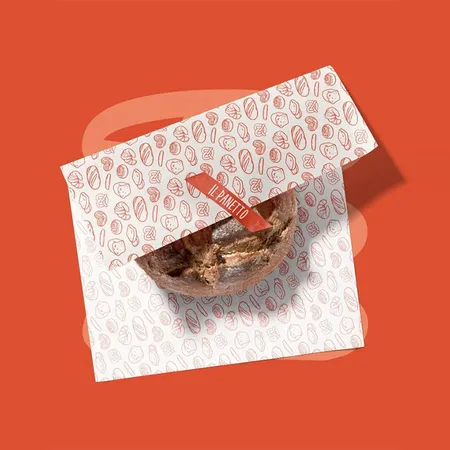 Food TraysStreet food, events and counter service eaten on the spotNacho TraysNachos with dip at cinemas, bars and eventsGreaseproof PaperWrapping, lining baskets and separating food layersPrinted Greaseproof PaperBranded wrapping and tray lining for food counters
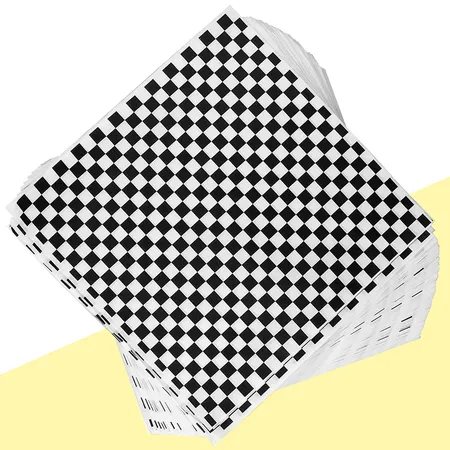 Deli PaperGrab-and-wrap sheets at deli and sandwich counters
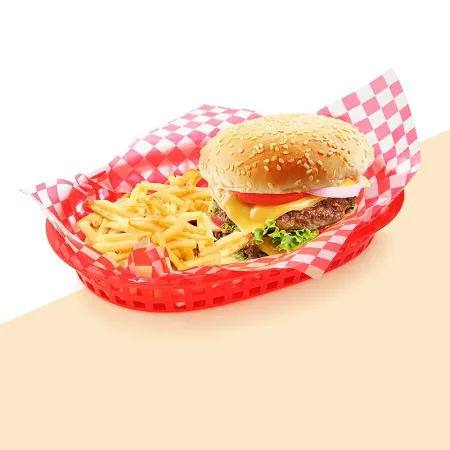 Food Basket LinersDine-in burger, chip and wing baskets
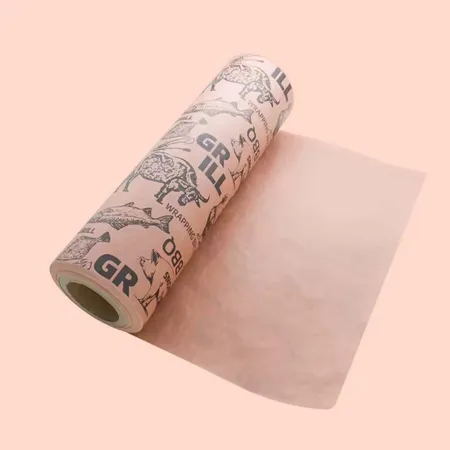 Butcher PaperMeat counters and barbecue serving boards
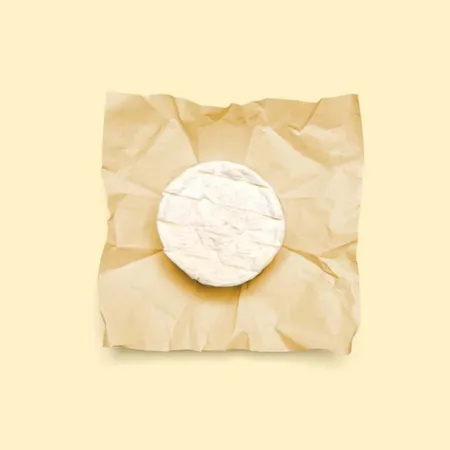 Cheese PaperWrapping cheese cut to order at the counter
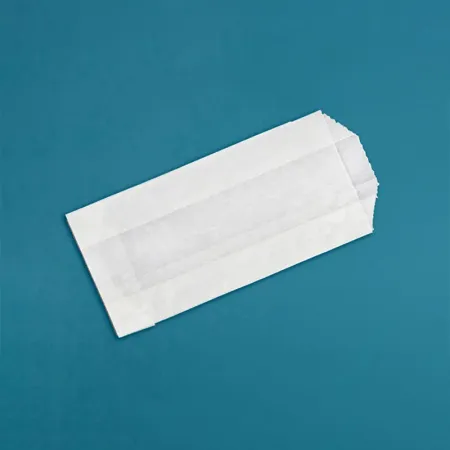 Greaseproof Paper BagsPastries, sausage rolls and cookies to go
What is in the food trays and greaseproof paper range?
This range is the flat end of food packaging. Two items are open trays that food is served in. The rest are papers and paper bags that wrap, line or separate food.
Paper often gets ordered as an afterthought, yet it is the item a kitchen gets through fastest. One busy burger bar can use several hundred sheets on a Saturday.
All nine items are compared below.
| Packaging | Best for | Key detail |
|---|---|---|
| Food Trays | Street food eaten on the spot | Open boat tray, snack to meal sizes |
| Nacho Trays | Nachos with a dip | Tray with a built-in pot holder |
| Greaseproof Paper | Wrapping, lining and separating | Plain sheets in common kitchen sizes |
| Printed Greaseproof Paper | Branded wraps and tray liners | Your logo or pattern across the sheet |
| Deli Paper | Grab-and-wrap at deli counters | Thin sheets that pull from a box one at a time |
| Food Basket Liners | Dine-in baskets of burgers and wings | Square sheets sized to your basket |
| Butcher Paper | Meat counters and barbecue boards | Roll or sheet in wide widths |
| Cheese Paper | Cheese cut to order | Sheets for wrapping wedges at the counter |
| Greaseproof Paper Bags | Pastries, sausage rolls and biscuits | Flat bags that resist butter and oil |
Who uses food trays and kitchen papers?
Street food traders and event caterers use trays more than anyone. Food goes straight from the hot plate to the tray, and the customer eats standing up.
Papers reach a wider group. Burger bars line baskets, delis wrap sandwiches, butchers wrap meat, cheesemongers wrap wedges and bakeries bag pastries.
Many of these businesses use paper and trays together. A tray of chips gets a printed sheet on top, or a wrap of fried chicken goes into a tray for carrying.
For hot food served to eat now, open food trays for street food are the most common starting point.
- Street food stalls, vans and festival kitchens
- Burger bars and wing shops with dine-in baskets
- Delis, sandwich bars and farm shops
- Butchers and barbecue restaurants
- Cheese counters and market cheese stalls
- Bakeries and cafés selling pastries to go
How do you choose a tray size?
Trays are sized by the floor of the tray, in millimetres. The portion you serve decides the size more than the food type does.
A snack tray for a few onion rings can be around 100 x 70 mm. A full meal of fries and a main often needs 230 x 150 mm.
Depth matters for anything with sauce. Loaded nachos or curry on chips need a deeper tray so the sauce stays inside the walls.
If you are unsure, serve a normal portion onto a plate and measure the footprint it covers. Add about 20 mm each way for fingers and a fork, and you have a sensible tray floor.
Nachos are a special case because the dip needs its own spot. Nacho trays with a dip holder keep the pot from sliding into the chips.
| Tray size | Typical use |
|---|---|
| About 100 x 70 mm | Snacks, sides and tasting portions |
| About 150 x 100 mm | Fries, wings or a hot dog |
| About 190 x 120 mm | A main with one side |
| About 230 x 150 mm | A full meal or a sharing portion |
What makes greaseproof paper different from ordinary paper?
Greaseproof paper is made so that oil and butter sit on its surface rather than soaking through. Ordinary paper goes see-through and soft as soon as fat touches it.
That makes greaseproof the default for anything fried, buttery or oily. It wraps burgers, lines baskets, separates burger patties and bags pastries.
Plain sheets are the workhorse. Plain greaseproof paper sheets are often ordered in two or three sizes for different jobs around the kitchen.
Greaseproof is not waterproof. Very wet food, like a dripping kebab, can still soften it over time, so a tray or box underneath helps.
Kraft paper is the other option for wrapping. It is stronger and has a natural brown look, but it does not resist grease in the same way unless it is coated.
When is printed greaseproof paper worth it?
Printed paper turns a cheap liner into a branding surface. Every basket, tray and wrapped burger then shows your name, often in customers' photos.
It works best where the paper is seen. Dine-in baskets, open trays and burger wraps are all on show. Paper used to separate patties in a fridge is not, so leave that plain.
Printed greaseproof paper with your logo usually carries a repeating pattern, so the brand shows however the sheet is folded.
- Print: one colour or two colour gives the crispest result
- Pattern: a repeat works better than one central logo
- Sizes: match your basket or tray, then add a little for overhang
- Use: keep printed paper for front of house only
Which papers suit delis, butchers and cheese counters?
Counter trades each have their own paper habits. Deli paper is thin and comes as interleaved sheets, so staff pull one at a time with gloved hands.
Butcher paper is heavier and often comes on a wide roll. It wraps cuts of meat and lines barbecue serving boards.
Cheese paper is chosen so a cut wedge can be wrapped neatly and re-wrapped at home. Cheese paper for counter wrapping is often ordered in two or three square sizes to match the cuts you sell.
Each of these can be plain or printed with your shop name. Printed counter paper is a quiet way to carry the brand into the customer's fridge.
How do basket liners and greaseproof bags fit in?
Basket liners are square sheets cut to sit in a dine-in basket with the corners standing up. Common sizes run from 250 x 250 mm to 400 x 400 mm.
Greaseproof bags are for food that goes out of the door in the hand. A sausage roll, a biscuit or a croissant goes into a flat bag, and butter stays on the inside.
Bakeries and cafés use bags far more than trays. Greaseproof paper bags for pastries are often made from 125 x 175 mm up to 215 x 250 mm.
What board and lining do food trays use?
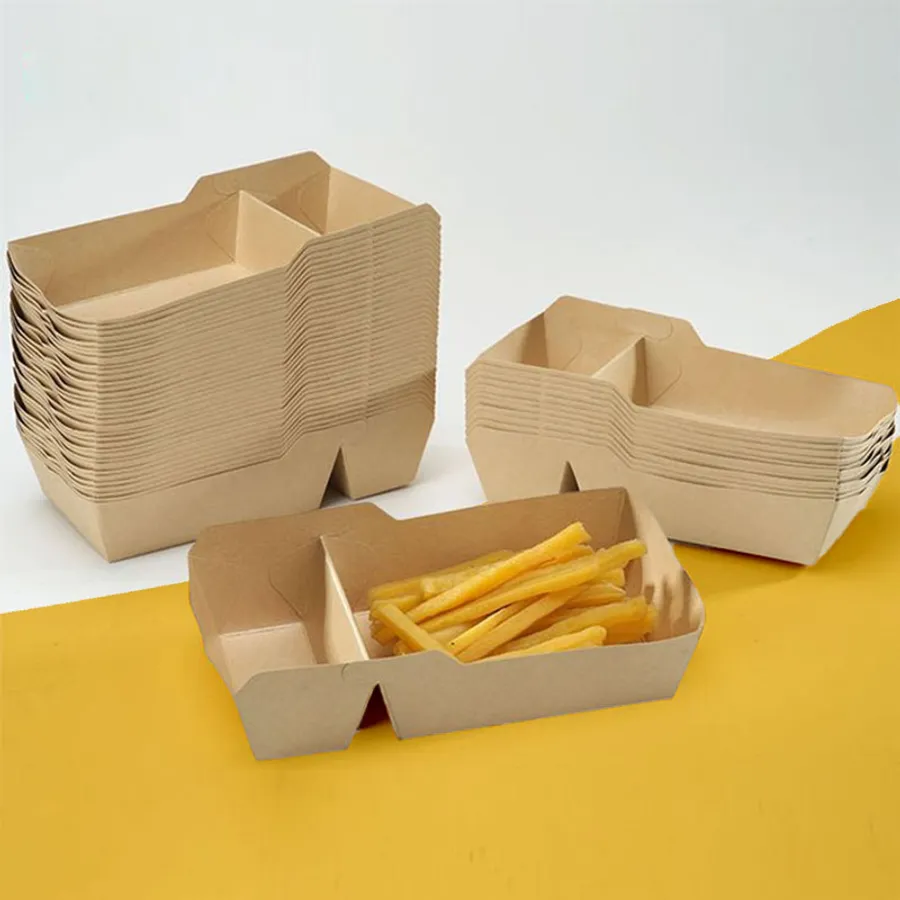
Food trays are usually white or kraft folding board. It is light, folds into a firm boat shape and takes print well on the outside and inside.
Oily food benefits from a grease-resistant lining or coating on request. Without it, chips and fried chicken can leave marks on the outside of the tray within minutes.
Inside print is available on trays, which suits a pattern or a short message that shows as the food is eaten. A matte or gloss varnish on the outside adds a little resistance to handling marks.
Most trays arrive flat. They fold in a second with a push on each corner. Once folded they nest neatly, so a stack of 50 takes little room beside the hot plate.
What mistakes do kitchens make with trays and paper?
Paper looks simple, so mistakes often come from not thinking about it until it runs out. These are the common ones.
Butchers sometimes order paper too narrow for a joint or a rack of ribs. Wide butcher paper for meat counters is often 450 or 600 mm across for that reason.
- Ordering one paper size for wrapping, lining and separating
- Printing paper that will only ever be used out of sight
- Using ordinary paper for fried food and getting see-through sheets
- Choosing a tray too shallow for sauced dishes
- Running out of liners because they are used faster than boxes
How many sheets and trays should you order?
Paper usage is easy to underestimate. Count how many baskets, wraps and bags go out on a busy day, then multiply by the days between orders.
Trays follow food sales more directly. If you sell 300 portions of fries a week, you need at least 300 trays a week, plus a few for spills.
Liners are the item kitchens run out of most. Every dine-in basket needs a fresh sheet, so food basket liners cut to size go faster than anything else on a busy night.
Quantities are quoted per order, and you can mix trays and papers on one quote. Many kitchens order paper in larger runs than boxes because it stores flat in very little space.
How do you order food trays and greaseproof paper?
Tell us which items you want, the sizes and roughly how many. If you want print, send your logo and say whether it should repeat.
Trays and sheets are priced from £0.25 per unit, and your written quote fixes the final figure. Food-contact materials available on request.
Your free design proof shows each item before printing. Production takes 4 to 6 business days after approval, and free tracked delivery reaches any UK address in 2 to 3 business days.
- List each tray and paper, with the job it does in your kitchen.
- Measure baskets, trays and wraps for sheet sizes.
- Choose plain or printed for each item.
- Upload your logo, then check and sign off the free proof.
- Receive everything together, flat and tracked.
Food Trays and Greaseproof Paper: common questions
Still unsure? Call +44 7578 382054, ask us on WhatsApp or write to info@thefoodpackaging.co.uk.
Can I order trays and greaseproof paper on the same quote?
Yes. Mix any items in this range on one quote and they arrive together with free tracked UK delivery.
Which paper should line a dine-in burger basket?
Basket liners in greaseproof paper are the usual choice. Measure the basket floor and add enough for the corners to stand up.
How is deli paper different from kitchen greaseproof?
Deli paper is a thinner sheet made to be pulled one at a time at a counter. Greaseproof paper is used for wrapping and lining greasier food.
Can butcher paper be printed?
Yes. A one colour repeat with your shop name is the most common print on butcher paper.
How big should a nacho tray be?
A single portion with a dip is often around 180 x 100 mm. We size the dip holder to your pot.
Does printed greaseproof paper cost more than plain?
Yes, because of ink and set-up. Your written quote can show both so you can decide where print is worth it.
Are greaseproof bags good for warm pastries?
Yes. They keep butter from marking the outside, and the paper lets a little steam escape so pastry does not go limp.
Can food trays be printed inside?
Yes, inside print is available on trays. It shows as the customer eats down to the bottom.
Which cheese paper size should a cheese counter order?
Most counters order two or three square sizes to match the wedges they cut most often, from about 200 x 200 mm.
Can trays hold food with sauce?
Yes, choose a deeper tray and ask for a grease-resistant lining or coating on request.
Will greaseproof paper hold up to a very wet kebab?
It slows grease, but very wet food can soften it over time. A tray or box under the paper helps on longer walks.
Where can I learn more about greaseproof paper and coated board?
Our guide to greaseproof paper and linings compares the options in more detail.
No question matches that search.
Design Your Packaging
Pick a real photo of the packaging you want, put your logo on it, choose the print and send it to us. Our designers turn it into a free, print-ready proof.
Upload your logo to see it on this photo
On the photo: Food Trays
Choose your packaging
Send us your full packaging brief
The more we know about the food, the service and the quantity, the sharper the price. A packaging specialist replies within one business day with a written quote and a free design proof.
- Price
- From £0.25 per unit, confirmed on a written quote
- Proof
- Free, before anything is printed
- Production
- 4–6 business days after proof approval
- Delivery
- Free and tracked across the UK, 2–3 business days
- Food contact
- Food-contact materials available on request