Packaging guide
Takeaway Box and Food Packaging Sizes in the UK
Common sizes for burger boxes, chip scoops, trays, bowls and bakery boxes, in millimetres.
Why do packaging sizes matter so much?
A box that is 10 mm too small squashes the food. A box that is 30 mm too big lets it slide, cool faster and look half empty. Both cost you money, one in complaints and one in board.
UK food packaging is described in three ways: millimetres for boxes and trays, ounces or millilitres for pots and bowls, and inches for pizza. This guide covers all three with the sizes kitchens most often start from.
Every figure here is guidance. Our packaging is made to your size, so treat these numbers as a starting point and check them against your own food.
How do you measure food for a box?
Measure the finished food, ready to serve, not the raw ingredient. A patty shrinks on the grill, but a bun with toppings grows. A cake grows once it is iced and topped.
Use a steel ruler and measure three portions from a busy service, then take the largest. Kitchens are not exact, and the box needs to fit the big ones too.
- Plate a normal portion exactly as it leaves the pass.
- Measure length, width and height at the widest points.
- Repeat with two more portions and keep the largest figures.
- Add 10 to 15 mm to length and width for fingers and air.
- Add 5 to 20 mm to height, more for soft toppings or decorations.
- Send those inside measurements when you ask for a quote.
What size burger box do you need?
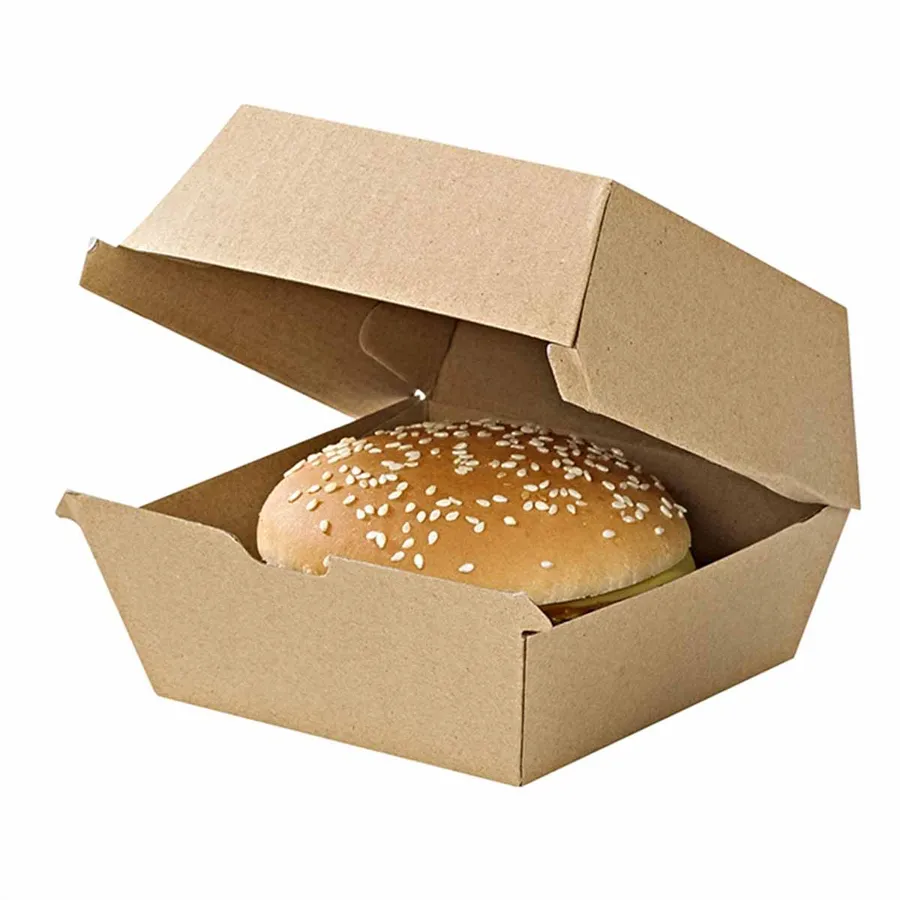
Burger boxes are sized from the bun. A standard 4 inch bun, about 100 mm, sits well in a box around 115 x 115 mm with 90 mm of height.
Junior burgers need less, often 90 x 90 x 70 mm. Double stacks need more height, often 110 mm or more, rather than more width.
Brioche and seeded buns often spread wider than a plain bun, sometimes to 110 or 115 mm. If you switch bread, measure again before you reorder boxes.
Meal boxes for a burger and chips are longer, often around 230 x 150 x 80 mm. The full spread of styles is in our burger and fast food boxes range.
| Item | Common inside size | Typical contents |
|---|---|---|
| Small burger box | 90 x 90 x 70 mm | Junior or kids' burger |
| Standard burger box | 115 x 115 x 90 mm | Single burger on a 4 inch bun |
| Tall burger box | 120 x 120 x 110 mm | Double stack |
| Burger and chip box | 230 x 150 x 80 mm | Burger with regular chips |
| Hot dog box | 180 x 70 x 60 mm | Regular hot dog |
| Fish and chip box | 250 x 140 x 55 mm | Regular fish supper |
How are chip portions sized?
Chip containers are sized by volume in ounces, because portions are scooped. A small is often about 8 oz, a regular about 12 oz and a large about 16 oz.
Weight is a useful cross-check. A regular portion of chunky chips often weighs 150 to 200 g, while thin fries weigh less for the same volume.
Scoops, cups, cones and bags can all be made to the same three volumes. That keeps portions consistent whichever format a customer gets. See chip scoop boxes in portion sizes for the most common format.
What sizes do trays, bowls and pots come in?
Open trays are sized by their floor. A snack tray is often about 100 x 70 mm, a fries tray 150 x 100 mm and a full meal tray 230 x 150 mm.
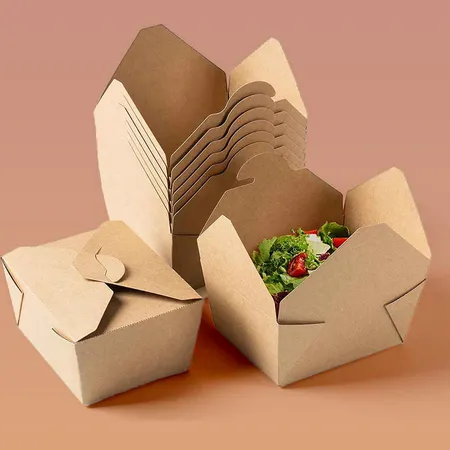
Bowls and pots are sized by volume, and UK menus switch between millilitres and ounces. To convert, multiply ounces by 28 and you get millilitres, near enough. A 26 oz box therefore holds roughly 740 ml.
A main course of rice and curry often fills 750 ml. A lunch bowl of grains and salad usually sits between 750 and 1,000 ml. Soup is most often sold in 8, 12 and 16 oz pots.
Fill a container you already use with water, then pour it into a measuring jug. It is the quickest way to find the volume you actually serve.
- Side dishes: 300 to 500 ml
- Main courses: 650 to 750 ml
- Large mains and sharing: 1,000 ml and up
- Soup: 8 oz cup, 12 oz regular, 16 oz large
- Noodles: 16, 26 and 32 oz boxes
What sizes do bakery and cake boxes use?
Bakery boxes are sized to the bake and the number of pieces. A single doughnut box is often about 110 x 110 x 60 mm, and a box of six about 280 x 190 x 70 mm.
Cake boxes are sized from the cake board, which is usually 1 to 2 inches wider than the cake. An 8 inch cake on a 9 inch board fits a box around 240 x 240 mm.
Height is the measurement bakers miss most. Allow for piped swirls, toppers and candles, often 20 mm above the highest point. Our bakery boxes and bags range lists typical sizes for each bake.
What sizes suit sandwiches, wraps and baguettes?
Sandwich packs follow the bread. A standard sliced loaf gives a face of about 125 x 125 mm. Most sandwich wedges are built around that, with depth set by the filling.
A thin filling needs around 55 mm of depth. A club or a deep deli filling can need 90 mm. Baguette boxes are sized by length, often 220 to 320 mm, about 70 to 80 mm wide.
Wrapping paper is sized to the item it wraps. Sheets of about 300 x 300 mm suit most sandwiches and tortilla wraps, while long subs and large burritos need 350 x 400 mm or more. Our sandwich and wrap packaging range covers each of these.
How do you size a takeaway bag?
Bags are sized to hold boxes flat, not to fit as much as possible. A bag that is too narrow tips boxes on their side and spills sauce.
Measure your most common order stacked as it would travel. A single meal box often fits a bag about 220 x 110 x 250 mm. Two or three boxes need something nearer 260 x 140 x 300 mm.
Check the bag against the insulated bags your drivers carry, too. Takeaway paper bags in three sizes cover most single, double and family orders.
Handles add height, so allow for them if the bag has to fit inside a delivery box or a basket on a bike.
Should you order in millimetres or inches?
Either works. Our quotes can use millimetres or inches, and we convert between them. One inch is 25.4 mm.
Pizza is the one area where inches are the norm, because pizzas themselves are sold by the inch. A 12 inch pizza box is around 310 mm inside. More detail is in our pizza box sizes guide.
For everything else, millimetres are more precise and less likely to be misread. If your current supplier works in inches, send those figures and we will confirm the conversion on your quote.
How many sizes should a menu carry?
Fewer than most kitchens think. Each extra size means another stack to store, another reorder to track and another chance of running out on a Friday.
Group menu items that fit the same box. A chicken burger, a beef burger and a veggie burger usually share one size. Most takeaways manage with three to five box sizes plus one bag.
Order the size that sells most in the largest quantity. Check your till data for a typical week, and split your order to match it rather than ordering every size equally.
Review your sizes every few months. Menus change, portions creep up and a box that fitted in spring can be tight by autumn.