Packaging guide
Printed Greaseproof Paper: Sheet Sizes, Ink Coverage and How to Use It
Common sheet sizes, one and two colour print, light ink coverage and how to wrap, line and cover with it.
What is printed greaseproof paper used for?
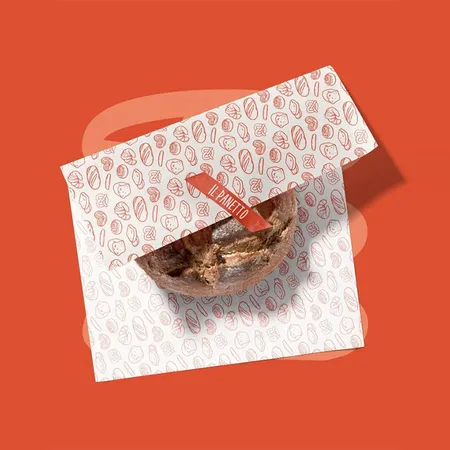
Printed greaseproof paper is the sheet with your name on it that goes around a burger, under a portion of chips or across a tray. It is the cheapest printed item most kitchens can buy, and the one customers see closest up.
It does three jobs at once. It keeps fat off the box or basket, it keeps the customer's hands clean and it puts your brand in every photo of the food.
The paper itself is a dense, smooth sheet that resists fat soaking through for the time it takes to eat a meal. It is not waterproof, and it is not meant to be. Wet sauce will come through eventually, which is why saucy food gets a pot rather than a wrap.
Burger bars, chip shops, sandwich counters, pubs and street food traders all use it. The paper is the same across those businesses. What changes is the sheet size and how the print is laid out.
Which sheet sizes are common in the UK?
Sheets are sold by size in millimetres, and the size is chosen from what it wraps. A burger wants a sheet that goes once around with a tuck. A tray liner wants a sheet a little bigger than the tray.
The table lists the sizes we quote most often and what each is used for. Every size can be changed, so if your tray is an odd shape, send its measurements. For unprinted sheets in the same sizes, see the plain greaseproof paper sheets.
| Sheet size | Inches, roughly | What it wraps or lines |
|---|---|---|
| 200 × 300 mm | 8 × 12 | Slider wraps, pastries, small basket liners |
| 250 × 380 mm | 10 × 15 | Single burger wrap, hot dog wrap, chip scoop liner |
| 300 × 400 mm | 12 × 16 | Tray liner, sandwich wrap, double burger wrap |
| 350 × 450 mm | 14 × 18 | Large wrap, fish and chip wrap, sharing tray |
| 450 × 700 mm | 18 × 28 | Full sheet for cutting down, sharing platters |
One colour or two colour?
One colour print is the standard for greaseproof paper. A single ink in a repeat pattern of your logo looks clean, prints evenly and costs the least to set up.
Pattern size matters as much as colour count. A 30 mm logo repeated across the sheet reads from a metre away. A 10 mm logo looks like texture, which can be the point for a subtle brand, but it will not be read in a photo.
Two colours give you a logo in one ink and a pattern or a line of text in another. It suits brands with a strong second colour, but keep both inks light and keep them apart on the sheet.
Full colour on greaseproof is possible but rarely worth it. The paper is thin and slightly see-through, so photographs look washed out. The guide to designing printed food packaging has more on colour choices by material.
Why should ink coverage stay light?
Greaseproof paper is thin and goes against hot, fatty food. Heavy ink coverage on a sheet like that causes three problems. The sheet curls, the colour can mark the box it sits against and the print looks patchy where the fat soaks in.
Keep the printed area to a fifth or a quarter of the sheet. A small logo repeated every 60 to 80 mm in a diagonal or grid pattern is the classic layout. It works because most of the sheet stays white or natural.
Avoid solid blocks of colour, full-bleed backgrounds and large dark shapes. Fine lines and small text also struggle on the soft surface, so keep text above 8 point. The printed greaseproof paper sheets are laid out this way on the free proof.
How do you use it as a burger wrap?
A wrap keeps the burger together on the walk home and gives the customer something to hold. It takes about five seconds once staff have done it a few times.
Use a 250 × 380 mm sheet for a 4 inch bun and 300 × 400 mm for a tall double. Put the printed side out so the logo shows on the outside of the finished parcel.
- Lay the sheet flat with the long side towards you and the print face down.
- Set the burger down in the middle, a little closer to you than the far edge.
- Fold the near edge over the top of the burger and tuck it under the far side.
- Fold the left and right sides in tight against the bun.
- Roll the burger away from you so the loose ends tuck under the base.
- For takeaway, cut the parcel in half through the paper so it opens without unwrapping.
How do you use it as a tray or basket liner?
A liner goes in before the food. It keeps the tray or basket clean, catches the fat and shows the print around the edge of the food. Choose a sheet about 50 mm bigger than the tray on each side so the print folds up the walls.
For a 220 × 160 mm tray that means a 300 × 400 mm sheet laid at a slight angle, so the corners stick up. For a wire basket, the same sheet pushed in loosely lines it in one move.
Pub kitchens use liners under fish and chips, wings and loaded fries in baskets. The printed food basket liners are cut to common basket sizes, but any size on the table works.
Cut-to-size liners save time on a busy pass. A sheet that drops straight into the tray without folding or trimming saves a few seconds per order, which adds up across a lunch service.
Does it work for sandwiches and deli counters?
Yes, and it is where lighter paper comes into its own. A sandwich or a filled bagel is wrapped in a 300 × 400 mm sheet, cut in half and held together by the fold.
For a deli counter, a smaller sheet separates sliced meats and cheeses and lines a paper bag before pastries go in. The same print then appears on the sandwich, the bag and the tray.
Deli counters often want a slightly different paper to a chip shop, with less grease resistance and a crisper fold. The printed deli paper sheets are made for that cold use.
What paper weight should you ask for?
Greaseproof is sold by weight in grams per square metre. Lighter paper folds neatly and costs less per sheet. Heavier paper holds more fat before it soaks through.
Most wraps and liners sit between 30 and 40 gsm. Fish and chip wraps, which take a lot of fat, often go to 40 gsm or more. If you are not sure, say what the food is and we suggest a weight on the quote.
- 28 to 32 gsm: sandwich wraps, pastry sheets, bag liners
- 35 to 40 gsm: burger wraps, tray and basket liners
- 40 gsm and above: fish and chip wraps, fried chicken, anything that drips
- Grease-resistant treatment on request for very fatty food
What mistakes do first orders make?
Sheet size is the usual one. A wrap sheet ordered 20 mm too small means a second sheet on every double burger, which doubles the cost of the item.
Print placement is the second. A single large logo in the centre of the sheet ends up under the food, where nobody sees it. A small repeat pattern shows wherever the fold lands.
The third is colour. Dark red or navy ink at heavy coverage on thin paper looks fine on screen and muddy on the table. Lighter colours and thinner lines look better in the hand. A quick wrap test with your own food, using the burger wrapping paper in your size, settles all three before the main run.
How do you order printed greaseproof paper?
Tell us what the paper wraps or lines, the size of that item, your logo and whether you want one or two colours. We lay out the repeat pattern and send a free design proof before any sheet is printed.
Paper is quoted in writing from £0.25 per unit for the number of sheets you need. Food-contact materials available on request and confirmed in the same quote. Printing takes 4 to 6 business days after the proof is approved. The sheets then travel free and tracked to any UK address in 2 to 3 business days.
Paper is light and packs flat, so most kitchens order eight to twelve weeks of sheets at a time. The food trays and greaseproof paper range lists the trays the sheets pair with.