Packaging guide
Opening a Takeaway: The Packaging Checklist for Your First Order
The smallest sensible range for day one, first-month quantities, proof timing and what to brief first.
Where does packaging sit in an opening plan?
Packaging is usually the last thing a new takeaway thinks about and the first thing a customer touches. The kitchen fit-out, the council registration, the menu and the signage all come earlier in the plan, and the boxes get ordered in the final week.
That is too late. Printed packaging needs a proof, then production, then delivery. Leave it to the last week and you open with plain boxes and a logo nobody sees.
This checklist is for the owner of a new takeaway, from a kebab shop to a Thai kitchen. It covers the minimum range to open with, how many to order for the first month and the order in which to brief everything.
What is the smallest sensible range for day one?
Open with four items, not fourteen. A main meal box, a side box, a bag and a sheet of paper cover almost every menu. Add specialist items once you know what sells.
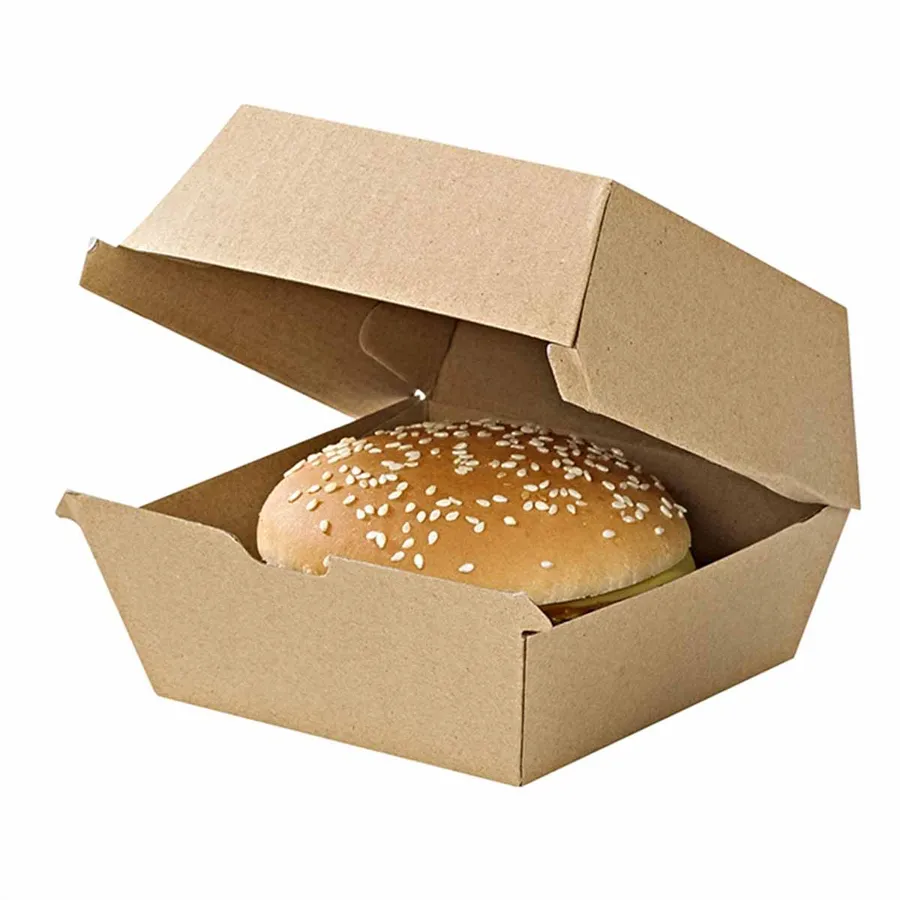
The table shows the day-one range and a sensible quantity for a shop expecting 40 to 60 orders a day. Scale it up or down to your own forecast. The main meal box does the most work, and the lidded food boxes for mains are the usual starting point.
| Item | What it carries | First order for 40 to 60 orders a day |
|---|---|---|
| Main meal box | Curry, rice, kebab, noodles, chicken | 2,000 to 3,000 |
| Side box or scoop | Chips, rice, salad, wings | 1,500 to 2,000 |
| Takeaway bag | Every order of two or more items | 1,500 to 2,000 |
| Greaseproof sheet | Wraps, liners, naan and bread | 2,000 to 3,000 |
| Sauce pots | Dips and sauces on the side | Plain, from a cash and carry at first |
How many units do you need for the first month?
Work from orders per day, not from a gut feeling. A new shop has no sales history, so use a conservative forecast and buy for one month, with an eye on reordering in week three.
A typical order uses one main box, one side container and one bag, with paper used on about half of orders. So for 50 orders a day over 30 days, the maths looks like this. For the side container, many new shops start with the open scoop boxes for chips because they also take rice and wings.
- Forecast daily orders: 50 for this example.
- Multiply by trading days in the month: 50 × 30 = 1,500 orders.
- Main boxes: one per order, so 1,500, plus a third of orders with two mains, giving about 2,000.
- Side containers: one per order, 1,500.
- Bags: one per order, 1,500.
- Paper: half of orders use a sheet, 750, rounded up to 1,000 for liners.
- Add 10 to 15 percent to every line for misfolds, staff training and the odd double portion.
When should you brief the proof?
Count backwards from opening day. Delivery across the UK is free and tracked, and it takes 2 to 3 business days. The print run takes 4 to 6 business days from the moment you approve the proof. Add a few days for the proof itself and any changes you want.
That is roughly three weeks from brief to boxes on the shelf, with a margin. So the packaging brief goes in four weeks before opening, and the logo needs to be final by then.
A soft launch a week before the real opening is a good idea, and it needs packaging too. If you plan one, add another week.
If you are also waiting on a sign, a menu print or a website, give the packaging the same deadline. All of them share the logo, and the logo is the thing that slips.
What should you brief first?
Brief in the order below. Each step depends on the one before it, and skipping ahead usually means a second proof.
The logo is the gate. Until it is final, nothing can be proofed properly. If a designer is still working on it, brief the box sizes and quantities now and send the artwork when it lands. The guide to designing printed food packaging covers file formats and safe zones.
- Final logo as a PDF, AI, EPS or SVG file, plus your brand colours
- The menu with portion sizes in grams or millilitres
- The main meal box size, measured from a real portion in a real container
- The bag size, measured from two main boxes side by side
- Quantities per item for the first month
- The opening date, so the proof and production dates can be worked back from it
Which items can wait until month two?
Anything that serves one dish or one occasion can wait. Dessert boxes, kids boxes, soup containers, catering trays and printed cups all depend on what sells, and in month one you do not know yet.
Soup is a good example. A Thai or Indian menu may list three soups. If they turn out to be 2 percent of orders, a printed soup container is a slow stock line. Use a plain one for a month, then print it if the numbers justify it. The lidded paper soup containers can be added to a second order.
The same goes for a second size of main box. Open with one size and note every time a portion does not fit. After four weeks you will know whether a small or a large is the missing one.
How does the bag change the order?
The bag is sized from the boxes, so it is the last size you fix and the first thing the customer sees. Measure two main boxes side by side, add 20 mm, and that is the base length. Add the height of a stacked pair for the bag height.
A bag with a flat base stands up on the counter and in a rider's bag. A bag without one tips over and spills the order. For a new takeaway on the apps, the flat base is not optional.
Print the bag even if you leave the boxes plain for month one. It is the item that walks down the street with your name on it. The flat-bottom printed takeaway bags are sized from your box measurements.
What do new takeaways get wrong?
We see the same mistakes on first orders from new shops, and most of them come from ordering in a hurry during the final week.
None of them is costly to fix at the proof stage. All of them are costly after a thousand boxes arrive.
- Ordering twelve printed items on day one, half of which sit unused
- Guessing the box size from the menu instead of a real portion
- A bag that does not fit two boxes side by side
- Approving the proof with a draft logo, then changing the logo a month later
- No greaseproof paper, so bread and wraps go straight into the box and stick
- Ordering in the last week and opening with plain boxes
How do sandwiches and cold items fit in?
If the menu has a daytime side, sandwiches, wraps or salads, you need one cold item on day one as well. A wedge or a wrap sheet covers most of it. Cold food is simpler because steam and grease are not a problem.
Keep the cold item in the same colours and board as the hot range, so the counter looks like one brand. A kraft wedge beside a kraft meal box reads as one shop.
Cold packaging can also be bought a little later than hot, because lunch trade builds slower than evening delivery. Week two is fine for the wedges if week one is all about the evening.
Sandwich trade also peaks at a different time, so a separate stock line does not compete with the evening boxes. The printed sandwich wedges with windows are the usual choice for a counter display.
How do you place the first order?
Email or WhatsApp us the list from this checklist, or call +44 7578 382054 and talk it through. We reply with a written quote starting at £0.25 per unit for the quantities on your list, plus a free design proof of each item. Food-contact materials available on request.
Once the proof is approved the boxes are made in 4 to 6 business days. They are then sent free and tracked to the shop, which takes 2 to 3 business days. Reorders are faster because the proof is already approved.
Once the first month is in, send us the numbers and we help trim or extend the range. The takeaway packaging range for new shops covers the day-one items and the ones that come later.