Packaging guide
Greaseproof Paper, Coated Board and Linings Explained
Which paper or board copes with grease, steam and wet food, and where each one falls short.
Why does the material matter for hot food?
Food packaging has three enemies: oil, steam and liquid. Each one attacks paper and board in a different way, and no single material beats all three.
Oil soaks into plain board and leaves dark patches on your print. Steam softens board from the inside and makes crisp food soggy. Liquid, like gravy or soup, finds every seam and corner.
This guide explains the materials we work with, what each one is good at and where it struggles. It should help you ask for the right thing on your quote.
What is greaseproof paper, and what can it do?
Greaseproof paper is a thin, dense paper made so that fat sits on its surface instead of soaking in. Ordinary paper goes see-through the moment butter touches it. Greaseproof stays opaque for much longer.
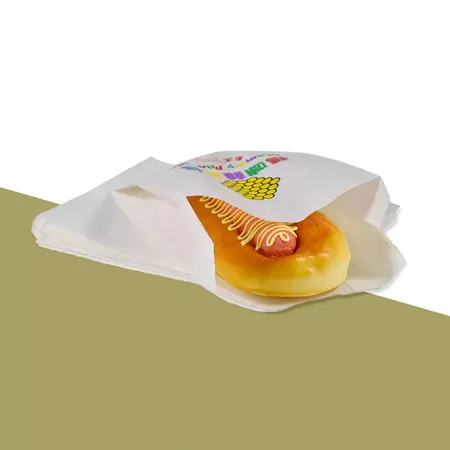
That makes it the standard choice for wrapping burgers, lining baskets, bagging pastries and separating patties. It is light, folds easily and can be printed in one or two colours.
Greaseproof is not the same as waterproof. A very wet filling, such as a dripping kebab or a curry sauce, can soften it over time. For those, paper works best as an inner wrap inside a box or tray. Our plain greaseproof paper sheets come in common kitchen sizes.
- Good at: butter, frying oil, burger fat, pastry
- Fair at: short contact with sauces and dressings
- Weak at: soup, gravy and long contact with liquid
- Best used: as a wrap, liner or bag
How does kraft paper compare?
Kraft paper is the brown paper used for bags and some wraps. It is strong for its weight and tears less easily than greaseproof.
On its own, kraft paper does not resist oil well. A greasy chip bag in plain kraft will show dark spots quickly. It is better suited to dry or lightly oily food: bread, rolls, popcorn and roasted nuts.
Kraft also suits a rustic look. Black or white print sits well on the brown surface, and small grease marks are less obvious than on white paper.
Kraft paper can have a grease-resistant coating on request, which closes much of that gap. Many bakeries use it for paper bread bags for loaves, where strength matters more than grease resistance.
What is folding board and when is it enough?
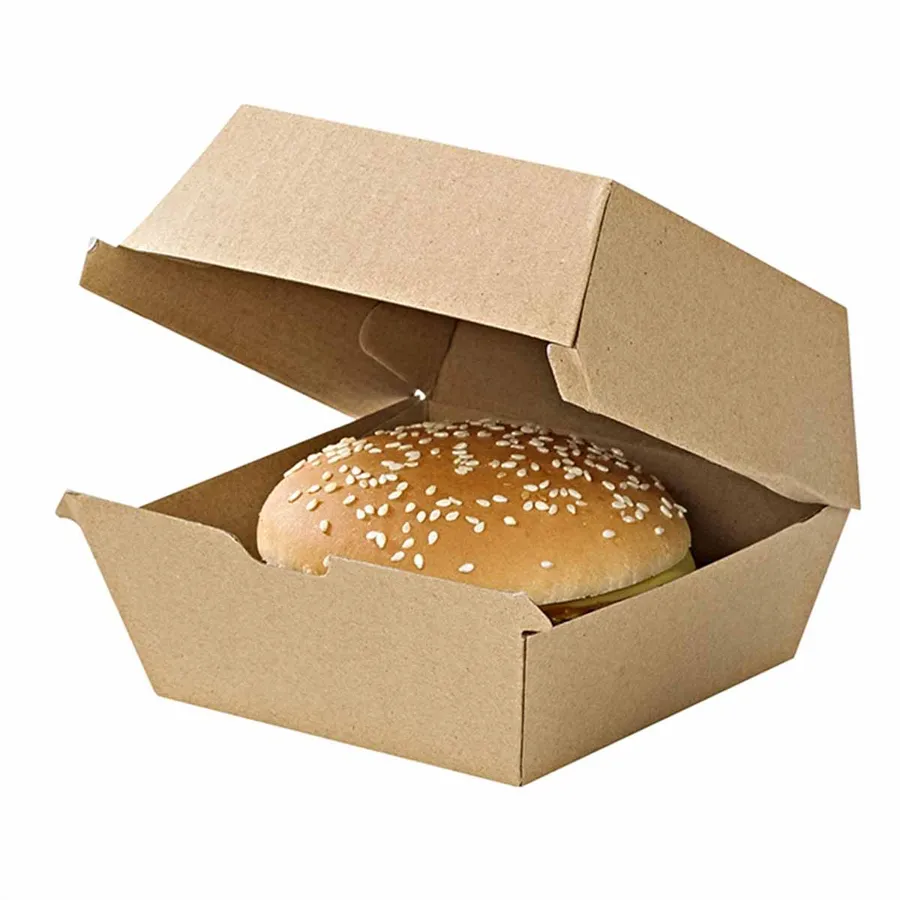
Folding board is the stiff, smooth board used for most single-portion boxes: burger boxes, noodle boxes, cupcake boxes and trays. It comes in white or kraft.
It folds cleanly, prints sharply and is light enough for portions up to a meal box. On its own it resists brief contact with grease, but long contact with hot oil will mark it.
For dry bakes, cold sandwiches and lightly oily food, plain folding board is usually enough. For fried chicken, chips and saucy dishes, ask for a lining.
White folding board shows grease marks more clearly than kraft, simply because of the colour. If you prefer a white look for oily food, a lining matters more.
When do you need corrugated board?
Corrugated board has a fluted layer between two flat sheets. That middle layer adds stiffness and traps air, which helps keep heat in.
E flute is about 1.5 mm thick. It suits burger meal boxes, small and medium pizza boxes and catering boxes. B flute is about 3 mm thick and is used for large pizza boxes and heavy loads.
Corrugated board handles steam better than thin board because it stays rigid when warm. The inner surface can still absorb grease, which is why pizza boxes are often paired with greaseproof pizza box liners.
| Material | Thickness | Handles oil | Handles steam | Typical use |
|---|---|---|---|---|
| Greaseproof paper | Thin sheet | Well | Poorly | Wraps, liners, pastry bags |
| Kraft paper | Thin sheet | Poorly unless coated | Poorly | Bread bags, popcorn bags |
| Folding board | Stiff single layer | Fairly, better lined | Fairly | Burger, noodle and bakery boxes |
| E flute corrugated | About 1.5 mm | Fairly, better lined | Well | Meal and small pizza boxes |
| B flute corrugated | About 3 mm | Fairly, better lined | Very well | Large pizza and catering boxes |
What does a grease-resistant lining or coating add?
A lining or coating is a treatment on the inside surface of the board or paper. It slows oil and moisture from reaching the fibres underneath.
The result is cleaner print on the outside and a box that keeps its shape for longer. It matters most for fried food, sauces and anything that sits in its box for more than a few minutes.
Linings and coatings are available on request and confirmed on your written quote. If you are unsure whether you need one, tell us the dish and we will suggest it.
- List each dish and how long it stays in the packaging.
- Mark which dishes are fried, sauced or very wet.
- Ask for a lining on those items only.
- Keep plain board for dry bakes and cold food.
- Check the quote shows a lining against the right items.
How do you stop steam making food soggy?
Steam is a venting problem more than a material problem. Hot food gives off moisture for several minutes, and a sealed lid traps it.
Small vent holes in a lid let steam escape while keeping most of the heat in. Open formats, like cones, scoops and trays, avoid the problem by having no lid at all.
For delivery, pair a vented box with a sturdy board. Corrugated board stays rigid when damp, while thin board can sag. A loaded fries box with deeper walls shows how wall height and board work together for wet, hot food.
Timing helps as well. Let fried food rest for 20 to 30 seconds on a rack before boxing. The first burst of steam then escapes into the kitchen rather than the box.
What about cold food and condensation?
Cold food has its own moisture problem. Packaging taken from a fridge or freezer gathers condensation as soon as it meets warm air, and the outside of the board gets damp.
Ice cream tubs, chilled salad boxes and sandwich wedges all face this. A coating on request helps the board resist moisture, so it keeps its shape and the print stays clean.
Fridge shelves are also tough on board. Packs are stacked, pulled forward and handled many times a day. Folding board with a varnish holds up better than uncoated board in a busy chiller.
For frozen products, a fitted lid matters as much as the board. It keeps ice crystals from forming on the food and stops the pack picking up smells.
Which material suits which food?
Most kitchens end up with two or three materials, not one. Matching each dish to the right material saves money on board and avoids complaints about soggy food.
As a rule, paper is for wrapping and lining and folding board is for single portions. Corrugated board is for anything large, heavy or travelling a long way.
- Burgers: folding board box, greaseproof wrap inside
- Fried chicken: lined folding board or E flute
- Fish and chips: lined box or greaseproof paper
- Pizza: E or B flute corrugated with a liner
- Pastries: greaseproof bags or lined bakery boxes
- Bread: kraft paper bags
- Soup and gravy: a lidded pot, never a folded box
What should you ask for on your quote?
Tell us the food, not just the packaging name. Saying 'a box for wings with hot sauce' tells us far more than 'a chicken box'.
Mention how long the food stays packed, whether it travels by delivery and whether it is eaten from the box. We use that to suggest board, lining and venting.
Food-contact materials available on request, confirmed on your written quote. Prices start from £0.25 per unit, and every order includes a free design proof. For a printed version of the paper itself, see printed greaseproof paper with your logo.