Packaging guide
Takeaway Packaging That Survives Delivery Apps: Tamper Tabs, Venting and Stacking
Tamper-evident tabs, vents, bag footprints and stacking for food that arrives the way it left the kitchen.
Why is a delivery order harder on packaging than collection?
A collection order sits on the counter for five minutes, then travels upright in a customer's hand. A delivery order goes into a rider's bag, leans on a corner, bounces over speed bumps and arrives twenty-five minutes later.
Most app orders arrive twenty to forty minutes after the kitchen closes the box, and the box has to look right at the far end of that.
On the apps the customer never sees your shop. The box is the whole experience. A lid that popped open or a curry that leaked into the rice is a one-star review, and you cannot explain it away at the counter.
So delivery packaging has four jobs that collection packaging does not: stay shut, stay upright, let steam out and prove nobody opened it on the way.
What do riders complain about most?
Riders see hundreds of orders a week from dozens of kitchens, and they notice patterns. Ask a few of yours and the same complaints come up every time.
Most of them trace back to the box rather than the food, and every one of them is fixable at the packaging stage.
- Lids that open when the bag tilts, so the rider arrives with sauce in the bag
- Round tubs stacked on square boxes, which slide off at the first corner
- Bags filled above the handles, so the top box gets crushed when the bag is picked up
- Hot and cold items in the same bag with no separation
- Boxes so wide they will not fit flat in the rider's backpack
- No label on the outside, so two orders for the same street get mixed up
How do tamper-evident tabs work on a paper box?
A tamper-evident tab is a lid tab that tears when the box is first opened. The customer sees a clean tab and knows nothing was touched. It also holds the lid shut harder than a plain tuck.
On a folding board box the tab is a perforated tongue that locks into a slot on the front panel. Pulling it up tears the perforation. A printed seal sticker across the lid does a similar job on boxes that do not have the slot.
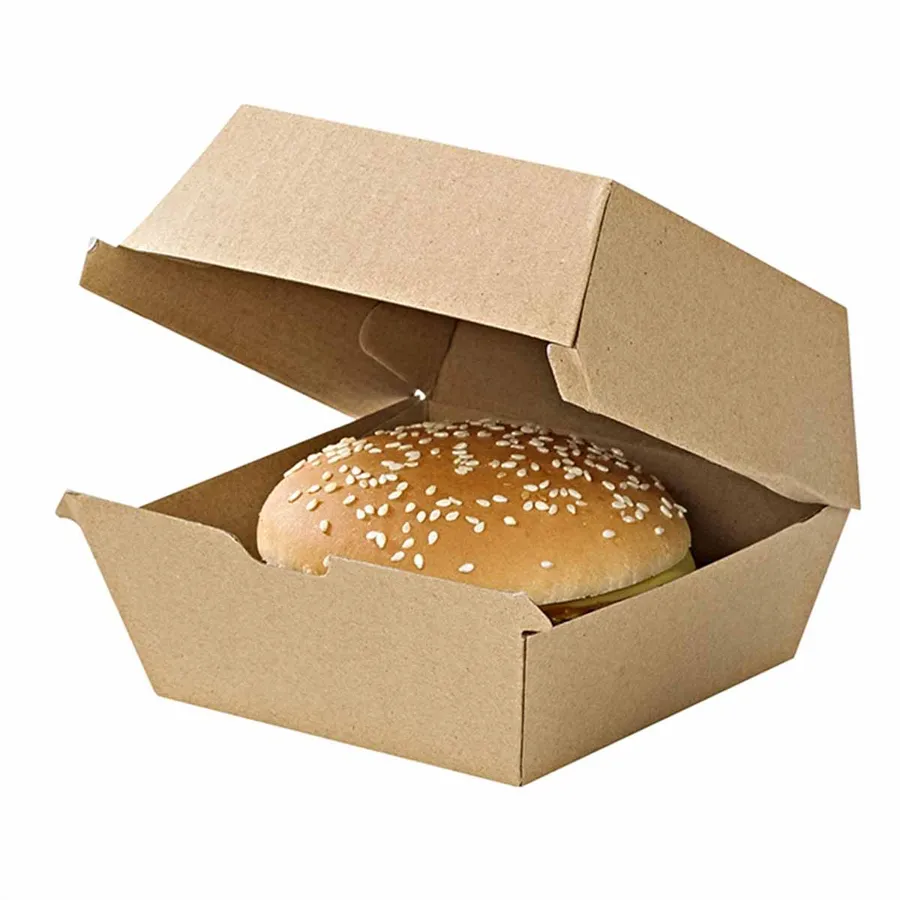
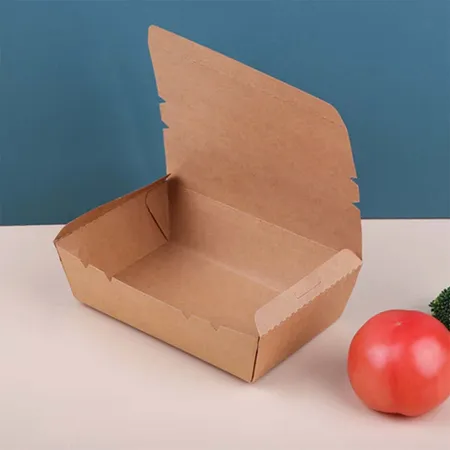
The lidded takeaway boxes with lock tabs can be made with the tear tab, and the seal sticker can be printed to match if you prefer that route.
Where should vents go on a delivery box?
Hot food in a sealed box steams itself. Vents let the steam out so fried food stays crisp and the lid does not go soft. But a vent on a delivery box has to be placed where sauce cannot reach it.
Put vents high on the side walls or in the lid, never low on the walls where liquid pools. Keep them small, around 8 to 10 mm, so the heat stays in for the journey. Wet dishes such as curry and noodles in sauce need no vents at all, because steam is not the problem and leaks are.
A good rule is vents on anything fried or breaded, none on anything with a sauce. For meals that mix both, use a divided box or two containers.
A box with a tear tab and vents can still be bagged, because the vents are inside the bag. Just fold the bag top over once rather than taping it shut, so the steam the vents release can leave the bag too.
Which box suits which dish?
The table matches common delivery dishes to the box style that gets them there in one piece, with the reason. Sizes are common starting points and every box is made to your portion.
For noodles and rice the folding carton with a wire handle or a locking lid is the usual choice. The leak-resistant noodle boxes hold about 750 ml in the mid size and close with a double tuck.
| Dish | Box to use | Why it works on delivery |
|---|---|---|
| Burger and chips | Divided box with vents on the chip side | Keeps the bun dry and the chips out of the sauce |
| Noodles or fried rice | Folding carton with a locking lid, about 750 ml | Tall and narrow, so it stands up in the bag |
| Curry with rice | Two lidded containers, curry below rice | Sauce stays in its own tub and the rice stays dry |
| Fried chicken | Vented box with a greaseproof liner | Steam leaves, fat stays off the board |
| Pizza | Flat corrugated box with vent holes at the back | Stiff enough to carry flat, vents stop a soggy base |
| Soup or dal | Paper container with a tight press-on lid | Shortest edge for a leak, easiest to tape shut |
| Salad or poke | Shallow wide box with a dressing pot | Dressing goes on at the table, leaves stay fresh |
How do boxes of curry, rice and noodles stack?
Stacking is where most delivery disasters start. A heavy curry on top of a light rice box crushes it. A round tub on a square lid slides off. The fix is to choose boxes with flat, locking lids and to put the heaviest container at the bottom.
Square and rectangular boxes stack more safely than round tubs because the flat lid gives the next box a full base to rest on. Boxes of the same footprint stack best of all, which is a good argument for running two or three sizes with the same base.
Bag the order with the heaviest box first, sauces in the middle and anything crisp on top. The square Chinese takeaway boxes share a footprint across their sizes for this reason.
How do you size boxes to a bag footprint?
A rider's thermal bag is usually about 400 × 400 mm inside and 300 mm tall, and your paper bag goes inside that. So the paper bag sets the limit, and the boxes have to fill it without rattling or sticking out of the top.
A common takeaway paper bag has a base of about 250 × 150 mm. Two boxes of 120 × 120 mm sit side by side in it, with a pot or a drink between them. A larger 300 × 200 mm base takes a pizza slice box and two cartons.
Measure the bag base first and work backwards. Then order boxes whose outside sizes fill it in pairs or threes. The printed takeaway bags with flat bases can be made to the box sizes rather than the other way round.
How do you stop soup and sauces leaking?
Liquid is the hardest thing to deliver. A paper container with a pressed-on lid holds soup, dal and curry sauce. That only works if the lid is the right size and the container is filled to no more than 80 percent.
Headroom matters. Soup filled to the brim pushes against the lid when the bag tilts and finds the seam. Leaving 20 mm at the top gives it somewhere to go.
Put a strip of tape or a printed seal across the lid for anything that can pour. Then stand the container upright in the bag with boxes either side so it cannot fall over. The paper soup containers with lids are sized for that headroom.
What should you test before switching boxes?
Do not change your delivery packaging on a Friday. Run a test during a quiet week, with real food and a real journey, before you approve the full run.
- Pack a typical order into the new boxes and bag it as you would for the apps.
- Carry it in a backpack for twenty minutes, with a few stairs and a short bike ride if you can.
- Open every box and check for leaks, popped lids, crushed corners and soggy food.
- Weigh the order and check the bag handles held with no tearing.
- Photograph the result as the customer would see it and compare it with the menu photo.
- Adjust vents, headroom or box sizes on the proof, then repeat the test once.
How do you order delivery packaging?
Send us your menu, your portion sizes, your bag base size and your average delivery time. We suggest box styles, tabs and vent patterns, and every item appears on a free design proof first.
Written quotes start from £0.25 per unit, and the quantity is whatever your order needs. Food-contact materials available on request, noted on the quote. Boxes are made in 4 to 6 business days from proof approval, then sent free and tracked to your UK address, which takes 2 to 3 business days.
The takeaway packaging range for delivery lists the boxes, cartons, bowls and bags that go out on the apps most often.